
Refractive lens exchangeGold Coast & Tweed Heads
Lens replacement surgery for people over 40 who want to reduce their reliance on glasses.
- Over 40s
- Lens options to suit you
- Not covered by health funds
The key facts
Suited to
- Presbyopia after 40
- Long-sightedness or a high prescription
- Early lens changes
Before treatment
- Biometry measures the eye
- Corneal tomography (Pentacam)
- OCT scan of the macula
What happens
- The same technique as cataract surgery
- Local anaesthetic with sedation, about 10 minutes
- Each eye treated separately
Afterwards
- Most people resume usual activities within days
- Some lenses can cause halos around lights at night
- Self-funded; a written quote is provided

Dr Travers Weaver
Dr Weaver uses the same technique as for cataract surgery. He is also a retinal surgeon, so he can treat retinal problems if they occur.
- FRANZCOSpecialist eye surgeon
- 2 extra yearsRetinal surgery training, Vancouver
- About 1,000Operations a year
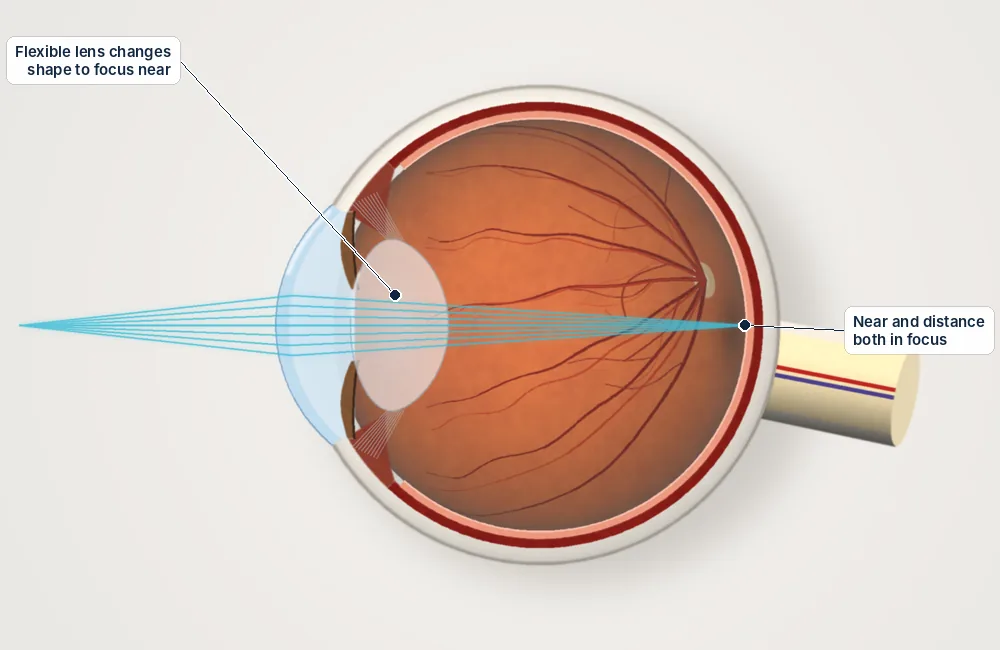
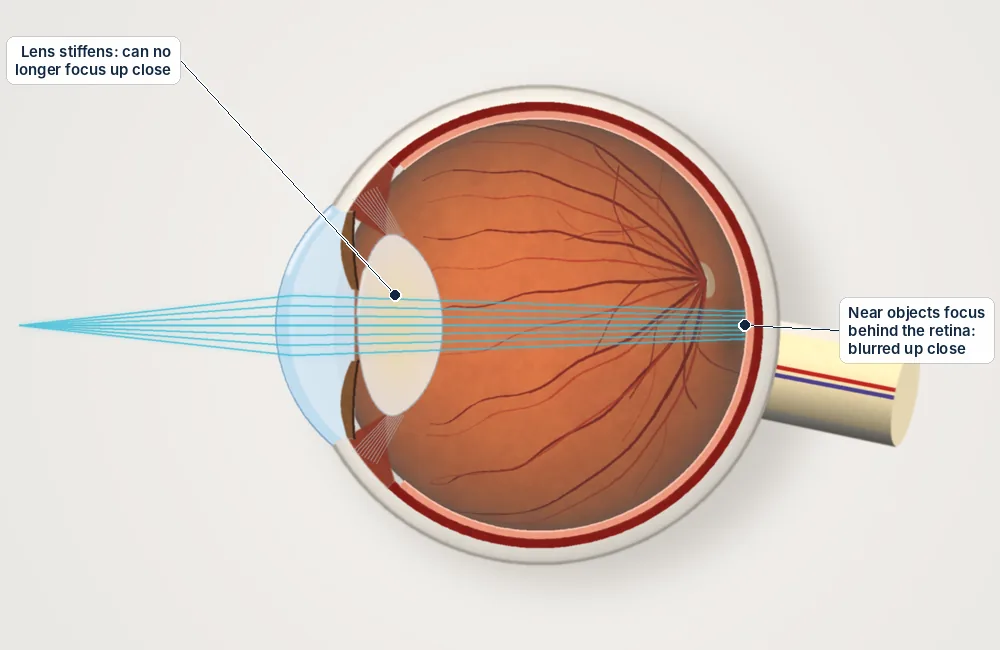
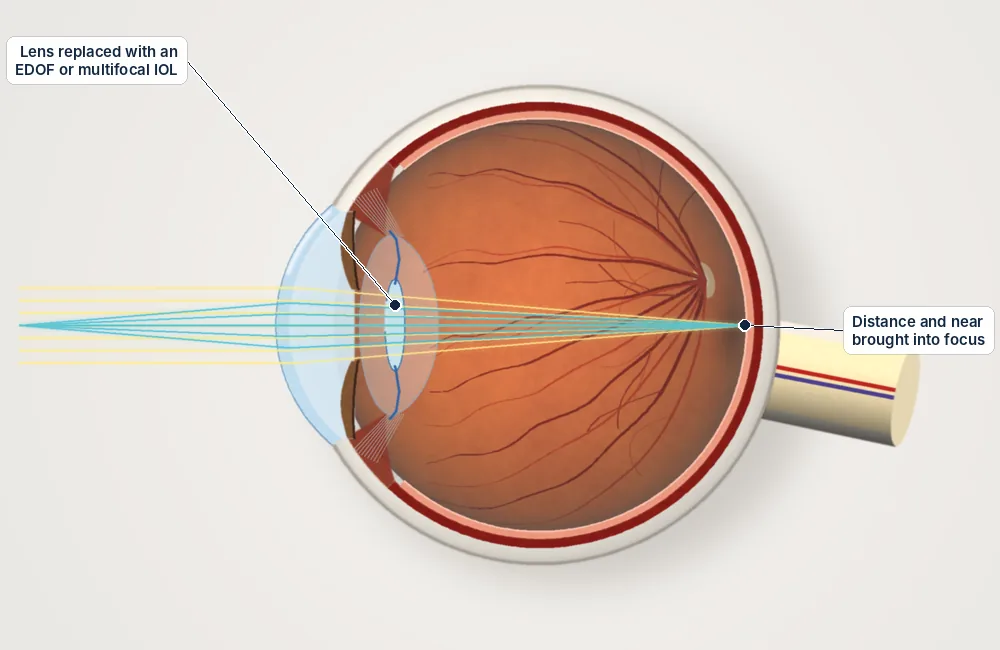
Inside the eye
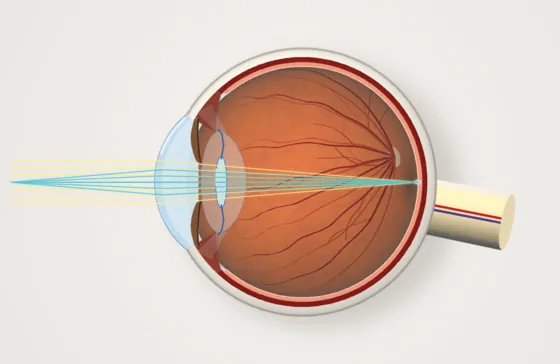
Presbyopia happens because the natural lens stiffens; an extended-range lens implant can widen the range of focus.
Simplified diagrams for patient education, not to scale.
Understanding the risks
Every procedure carries some risk. These are approximate rates from published studies, grouped by how often they happen. They are averages, not a prediction for you; Dr Weaver will discuss your own risks before any treatment.
Aftercare guides| Risk | Approximate rate |
|---|---|
| Common, usually temporary or manageable | |
| Halos or glare around lights at night | Common at first with multifocal and EDOF lenses; often improves |
| Uncommon | |
| Tear in the lens capsule during surgery | About 1–2 in 100 |
| Swelling at the macula (CMO) | About 1–2 in 100, usually treated with drops |
| Retinal detachment if very short-sighted | Higher, about 1–2 in 100 or more |
| Rare but serious | |
| Infection inside the eye (endophthalmitis) | About 1 in 1,000–2,000 |
| Retinal detachment | Less than 1 in 100 |
Everything you need to know
Tap a topic to open it.
Overview
Dr Weaver offers refractive lens exchange (RLE), also called clear lens extraction, for people over 40 who want to rely less on glasses or contact lenses. He performs RLE at Miami Private Hospital and Pacific Private Hospital on the Gold Coast, and at Tweed Day Surgery in Tweed Heads.
What is refractive lens exchange?
RLE is the same operation as cataract surgery. The natural lens inside the eye is removed and replaced with an artificial lens of carefully calculated strength. The difference is that it is done before a cataract has formed. The aim is to correct short-sightedness, long-sightedness and astigmatism, and the loss of reading vision that comes with age, so you rely less on glasses.
Because the natural lens is replaced for good, a cataract cannot form in that eye later.
Who is it suitable for?
- People aged 40 and over, especially those who now need reading glasses as well as distance glasses
- People who are very short-sighted or long-sighted and not suitable for laser eye surgery
- People with a thin cornea or other corneal problems that rule out laser surgery
- People with early lens changes who are nearing cataract age
- People who want to rely less on glasses for both distance and reading
RLE is not usually recommended for healthy people under 40 with a small prescription, because their eyes can still change focus well. Dr Weaver will check carefully whether it suits you.
Lens options
Choosing the right lens for how you live, what you need to see and your eye measurements is the key to a good result. The same lenses used in cataract surgery are available:
- Multifocal lens: clear vision far away, at middle distance and up close. It gives the best chance of needing glasses less. It suits people with realistic expectations and no other eye conditions.
- Extended depth of focus lens: good distance and middle vision, with fewer halos than a multifocal. You may still need glasses for small print. A popular choice for active people.
- Monofocal lens: clear distance vision, with reading glasses for close work. Some people choose to have one eye set for distance and one for reading (monovision).
- Toric lens: corrects astigmatism, combined with any of the lenses above
The operation
RLE is done as day surgery with the eye numbed and sedation, in the same way as cataract surgery. Each eye is done separately, usually 1 to 2 weeks apart. The operation takes about 10 minutes for each eye. Recovery is quick, and most people see much more clearly within the first few days.
RLE compared with laser eye surgery after 40
- Can help with reading vision, which laser surgery on the cornea does not restore
- The lens implant does not change with age, although other parts of the eye can
- A cataract cannot form later in that eye
- Suits a wider range of prescriptions than laser surgery
- No tissue is removed from the cornea
Risks and what to expect
Like all eye surgery, RLE has small but real risks, which Dr Weaver will go through with you. They include infection, inflammation, more floaters and, in very short-sighted people, a slightly higher risk of retinal detachment. Dr Weaver is also a retinal surgeon, so he can treat retinal problems if they happen.
Keep your expectations realistic. Many people need glasses much less after RLE, but results vary. They depend on accurate measurements, the lens chosen and how your eye heals. Before recommending anything, Dr Weaver does a full assessment, including corneal mapping (Pentacam), eye measurements (IOLMaster) and a scan of the macula (OCT).
You may also want to read
Talk to Dr Weaver about your eyes
A referral from your GP or optometrist is needed to claim Medicare rebates. Our team can help with bookings at Robina and Tweed Heads.