
Central serous chorioretinopathyGold Coast & Tweed Heads
Fluid collects under the macula, often in adults aged 30–50, blurring or dimming central vision.
- Often settles on its own
- OCT monitoring
- Laser or PDT if persistent
The key facts
What you may notice
- Blurred or dim central vision
- Objects looking smaller or distorted
- A grey patch in the centre of vision
How it is diagnosed
- OCT scan shows the fluid
- Fluorescein or ICG angiography to find the leak
- Review of medicines, especially steroids
How it is treated
- Watching for 2–3 months, as many cases settle
- Reviewing any steroid medicines with your doctor
- Photodynamic therapy or micropulse laser if fluid persists
Recovery
- Fluid often clears within a few months
- Vision usually recovers well
- It can come back, so follow-up matters
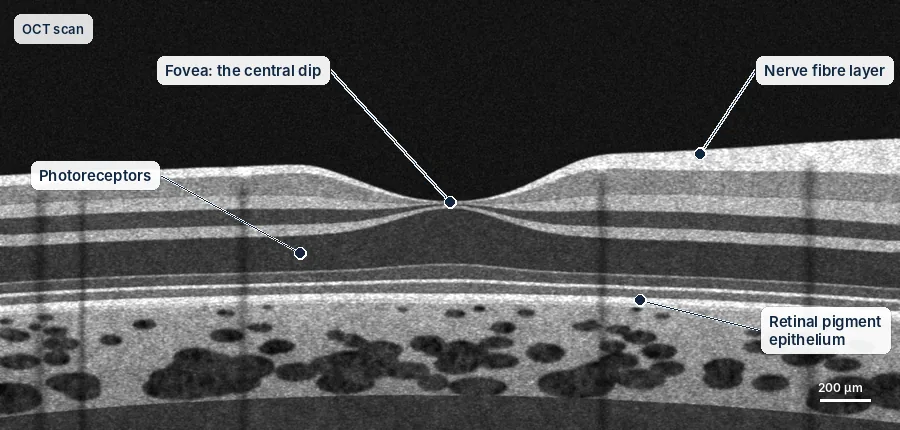
Inside the eye
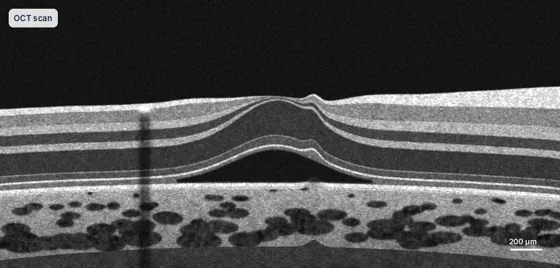
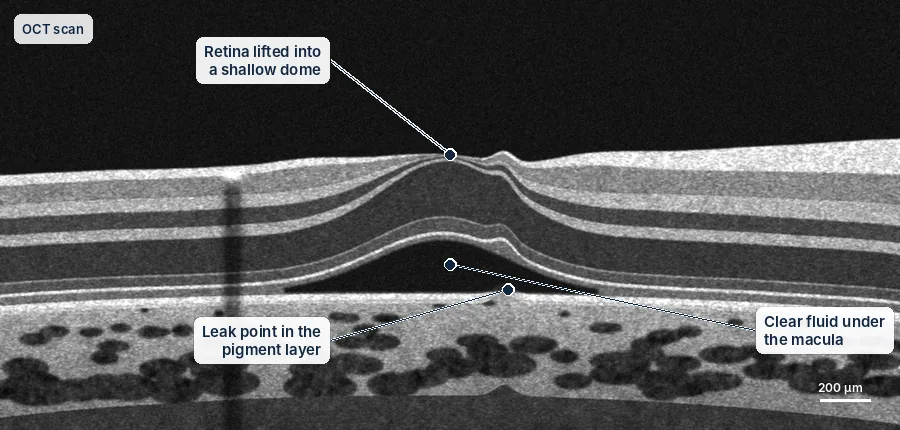
OCT shows a dome of clear fluid lifting the retina at the macula.
Simplified diagrams for patient education, not to scale.
Everything you need to know
Tap a topic to open it.
Overview
In central serous chorioretinopathy (CSC), fluid leaks from the layer under the retina and collects under the macula, the centre of the retina. This lifts the retina in a shallow blister, so central vision becomes blurred and dim.
It most often affects adults aged 30 to 50, and is more common in men.
Who gets CSC?
- People using steroid medicines in any form, including tablets, inhalers, nasal sprays, creams and joint injections
- Stress and high levels of the stress hormone cortisol
- Pregnancy
- Obstructive sleep apnoea
Never stop a prescribed steroid without speaking to the doctor who prescribed it.
Treatment options
Many cases clear up on their own within 2 to 3 months, so at first it is common to simply repeat the OCT scan. If the fluid stays or vision is affected, options include photodynamic therapy (a light-activated treatment), where available, and micropulse laser. Eye injections are used if abnormal blood vessels grow.
Outlook
Most people get good vision back once the fluid clears, although some notice mild distortion or that things look less sharp. CSC can come back, and long-lasting cases need closer checks.
You may also want to read
Talk to Dr Weaver about your eyes
A referral from your GP or optometrist is needed to claim Medicare rebates. Our team can help with bookings at Robina and Tweed Heads.