
Diabetic retinopathyGold Coast & Tweed Heads
Damage to the small blood vessels of the retina from diabetes. Finding it early and treating it helps protect sight.
- Screening and monitoring
- Injections and laser
- Vitrectomy when needed
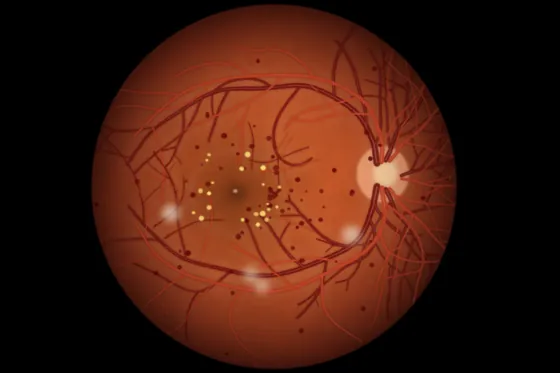
The key facts
What you may notice
- Often no symptoms in the early stages
- Blurred vision from swelling at the macula
- Sudden floaters from bleeding
How it is diagnosed
- Dilated examination and retinal photographs
- OCT scan for macular swelling
- Fluorescein angiography when needed
How it is treated
- Anti-VEGF injections for macular oedema
- Laser treatment for abnormal new vessels
- Vitrectomy for bleeding or scar tissue
Recovery
- Good control of blood sugar, blood pressure and cholesterol
- Regular eye checks, as advised for your stage
- Prompt review for any change in vision

Dr Travers Weaver
Dr Weaver provides the whole range of care for diabetic eye disease: scans, injections and laser in his rooms, and vitrectomy surgery for advanced disease.
- FRANZCOSpecialist eye surgeon
- 2 extra yearsRetinal surgery training, Vancouver
- About 1,000Operations a year
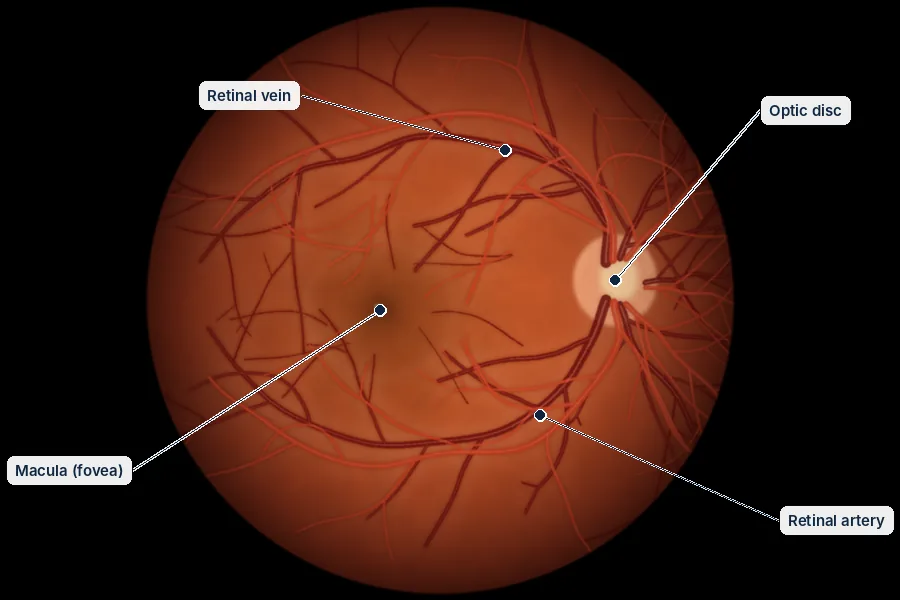
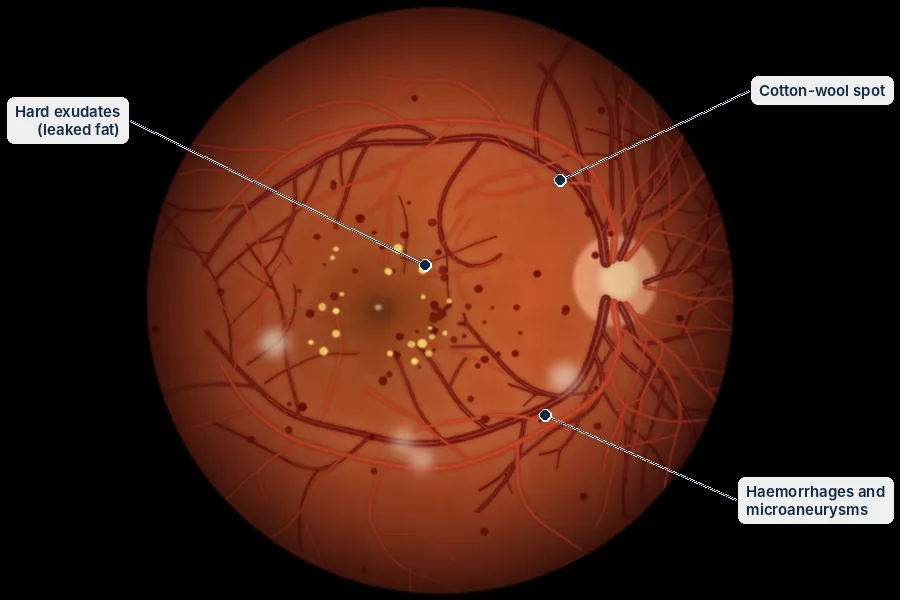
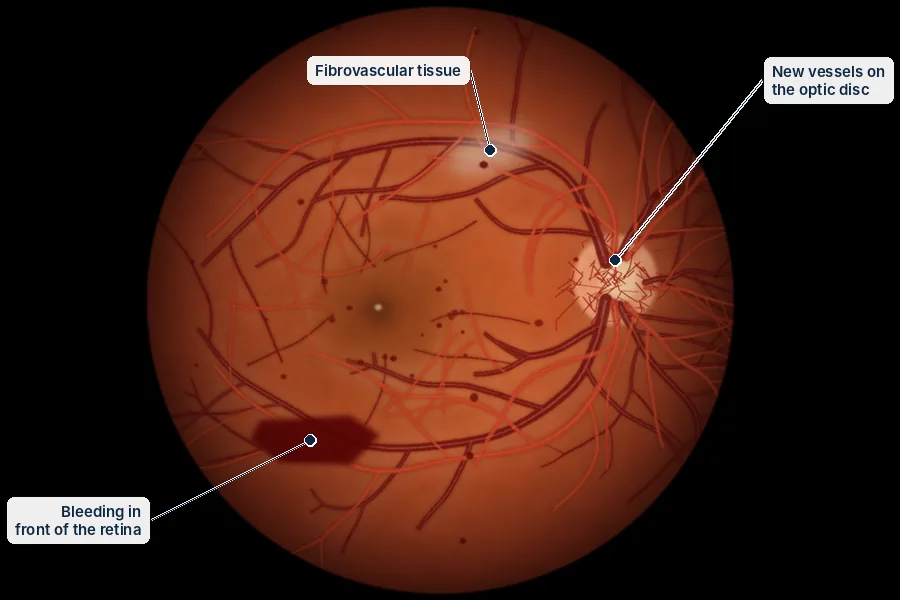
Inside the eye
High blood sugar damages small retinal vessels, causing leakage and, later, fragile new vessels.
Simplified diagrams for patient education, not to scale.
Understanding the risks
Every procedure carries some risk. These are approximate rates from published studies, grouped by how often they happen. They are averages, not a prediction for you; Dr Weaver will discuss your own risks before any treatment.
Aftercare guides| Risk | Approximate rate |
|---|---|
| Uncommon | |
| Laser: reduced night or side vision | Possible after extensive peripheral laser |
| Rare but serious | |
| Infection inside the eye (endophthalmitis) | About 1 in 2,000–3,000 injections |
| Retinal tear or detachment | Rare, about 1 in 5,000–10,000 injections; the risk adds up over many injections |
Everything you need to know
Tap a topic to open it.
Overview
Dr Weaver checks and treats diabetic eye disease. Eye injections and laser are done at his rooms in Robina and Tweed Heads. When surgery is needed, he operates at Miami Private Hospital, Pacific Private Hospital and Tweed Day Surgery. Everyone with diabetes needs regular eye checks with drops to widen the pupil, even if their vision seems fine.
What is diabetic retinopathy?
Diabetic retinopathy is damage to the small blood vessels in the retina, caused by high blood sugar over many years. About one in three people with diabetes has some degree of it. It is a leading cause of vision loss in people of working age.
The blood vessels become weak and leaky, and some become blocked. In advanced disease, new, abnormal blood vessels grow on the surface of the retina. These can bleed and form scar tissue, and the scar tissue can pull the retina off (a tractional retinal detachment).
The stages
- Early to moderate disease (non-proliferative): small bulges and bleeds in the blood vessels. Vision is often normal unless the centre of the retina is affected.
- Swelling at the centre of the retina (diabetic macular oedema): fluid leaks into the macula and blurs central vision. It can happen at any stage and is the most common reason people with diabetes lose vision.
- Advanced disease (proliferative): new, fragile blood vessels grow on the retina or optic nerve. They can bleed into the eye and cause a retinal detachment.
Symptoms
- Early disease often has no symptoms. This is why regular checks matter.
- Blurred vision, or vision that changes from day to day
- Dark floaters or sudden loss of vision from bleeding in the eye
- Distorted central vision
- Colours look faded
Treatment
Your general health comes first. Good control of blood sugar, blood pressure and cholesterol, and not smoking, all slow the damage. Your GP and diabetes team are key here.
Eye injections are the main treatment for swelling at the centre of the retina. They reduce the fluid and often improve vision, and are sometimes combined with laser. Injections are given in the rooms at Robina and Tweed Heads, with Medicare rebates for eligible patients.
Laser. For advanced disease, laser to the outer retina (panretinal photocoagulation) helps stop new vessels growing. A more targeted laser is sometimes used for swelling. Laser is done in the rooms.
Surgery (vitrectomy) is needed when bleeding does not clear, when scar tissue pulls the retina off, or for very advanced disease. Dr Weaver performs this at Miami Private Hospital, Tweed Day Surgery and Pacific Private Hospital.
How often to have your eyes checked
- Diabetes but no eye damage: at least every two years under Australian guidelines. Yearly if you are at higher risk, for example if you have had diabetes a long time, your sugar or blood pressure is hard to control, or you are an Aboriginal or Torres Strait Islander person.
- When to start: type 2 diabetes, at diagnosis. Type 1 diabetes, from puberty or five years after diagnosis.
- If you already have eye damage: how often depends on how severe it is. Mild disease, yearly. Moderate to severe, every 3 to 6 months. Advanced disease, every 1 to 3 months.
- Pregnancy: women with diabetes should have an eye check early in pregnancy and be watched closely until the baby is born.
You may also want to read
Talk to Dr Weaver about your eyes
A referral from your GP or optometrist is needed to claim Medicare rebates. Our team can help with bookings at Robina and Tweed Heads.