
Pterygium surgeryGold Coast & Tweed Heads
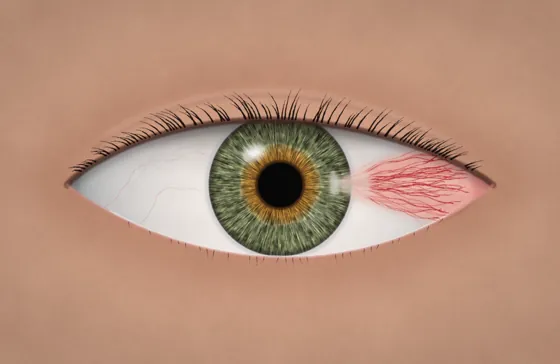
A fleshy growth from the white of the eye onto the cornea, common in sunny, outdoor climates.
- Day surgery
- Conjunctival autograft
- Public at Murwillumbah
The key facts
What you may notice
- A red, irritated or gritty eye
- A visible growth on the eye
- Blurred vision if it grows across the cornea
How it is diagnosed
- Slit-lamp examination
- Corneal tomography if it causes astigmatism
- Photographs to monitor growth
How it is treated
- Lubricants and sun protection for mild cases
- Removal under local anaesthetic with light sedation
- A graft of your own conjunctiva lowers the chance of regrowth
Recovery
- The eye is usually padded for the first day
- Eye drops for several weeks
- Sunglasses outdoors to help prevent regrowth
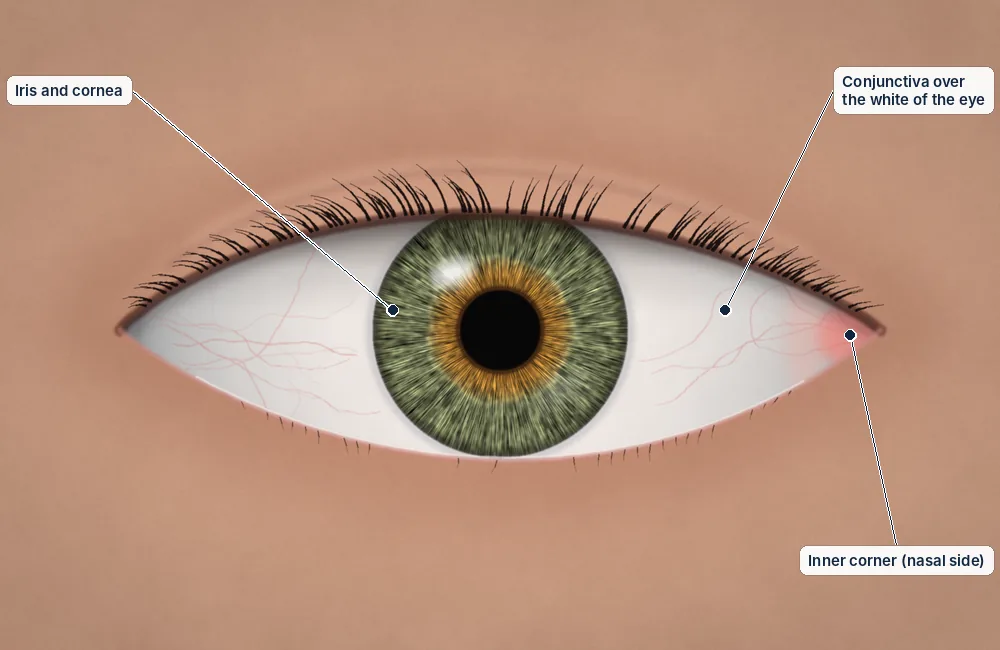
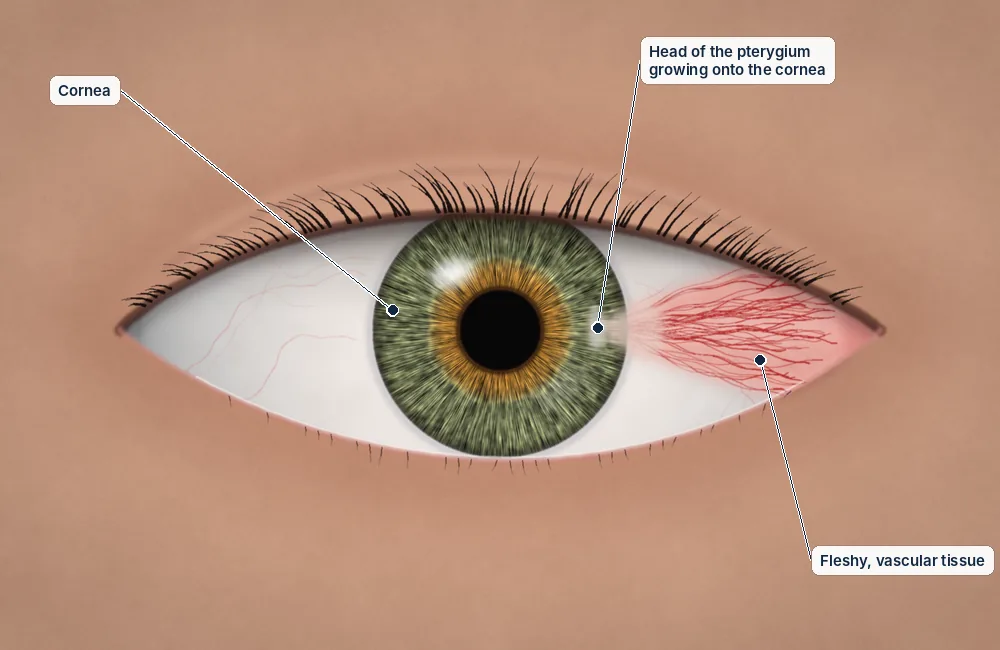
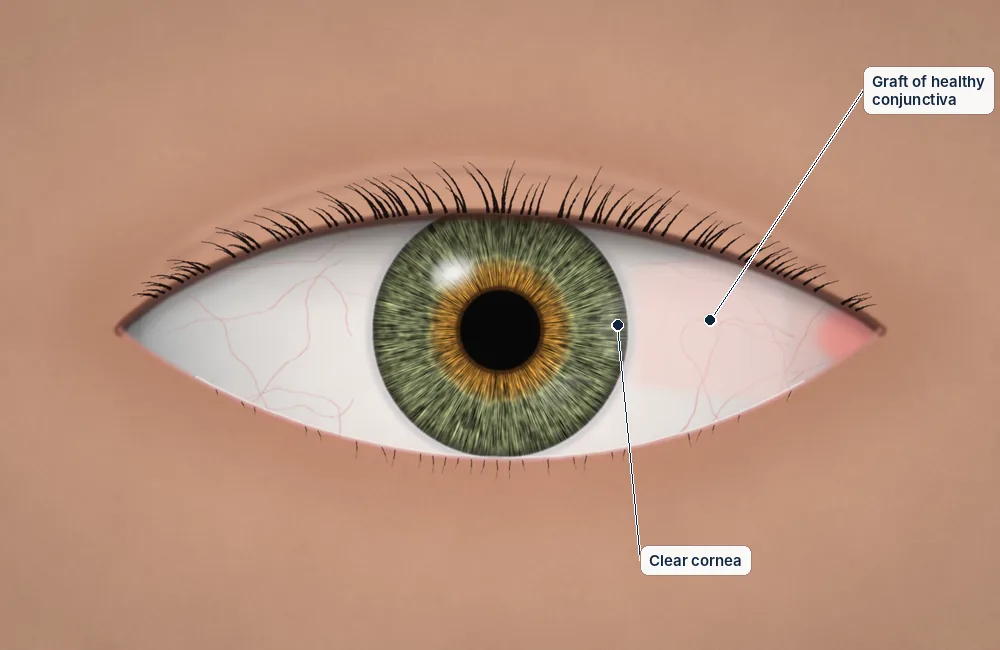
Inside the eye
A pterygium grows from the conjunctiva onto the cornea; removal with a graft lowers the chance of regrowth.
Simplified diagrams for patient education, not to scale.
Understanding the risks
Every procedure carries some risk. These are approximate rates from published studies, grouped by how often they happen. They are averages, not a prediction for you; Dr Weaver will discuss your own risks before any treatment.
Aftercare guides| Risk | Approximate rate |
|---|---|
| Common, usually temporary or manageable | |
| Discomfort and redness | Common for 1–2 weeks |
| Uncommon | |
| Regrowth with a conjunctival graft | About 5–10 in 100 (up to 1 in 2 without a graft) |
| Graft swelling or movement | Uncommon, usually managed in the rooms |
Everything you need to know
Tap a topic to open it.
Overview
Dr Weaver assesses pterygium at his rooms in Robina and Tweed Heads. He performs pterygium surgery at Miami Private Hospital, Pacific Private Hospital and Tweed Day Surgery. Public pterygium surgery is also available for eligible Northern NSW patients at Murwillumbah District Hospital.
Pterygium is common in sunny, outdoor places like the Gold Coast and Northern NSW. It is strongly linked to years of sun (UV) exposure.
What is a pterygium?
A pterygium (say "teh-RIJ-ee-um") is a raised, wedge-shaped growth on the surface of the eye. It grows from the white of the eye onto the clear front window of the eye (the cornea), most often from the side nearest the nose. A large pterygium can change the shape of the cornea, causing astigmatism, or grow across your line of sight.
A pinguecula is a similar yellowish spot on the white of the eye that has not grown onto the cornea. It does not usually need surgery.
Symptoms
- A pink or red fleshy growth on the white of the eye
- Redness, irritation or a gritty feeling, often worse in wind, dust or sun
- Blurred vision, if the pterygium causes astigmatism or grows towards the centre of the cornea
- Concern about how the eye looks
When is surgery recommended?
A small pterygium that causes few problems can often be managed with lubricating eye drops, good sunglasses and regular checks. Surgery may be recommended when:
- It is growing towards the centre of the cornea
- It is affecting your vision, including by causing astigmatism
- Irritation continues despite drops
- You are planning cataract or lens surgery and the pterygium would affect the eye measurements
The operation
Surgery is done as day surgery. The eye is numbed, and you usually have light sedation.
- Removal: the pterygium is carefully lifted off the cornea and removed, and the surface is smoothed.
- Graft: a thin piece of healthy surface tissue is taken from under the upper eyelid of the same eye. It is placed over the bare area and held with tissue glue or fine stitches. This is called a conjunctival autograft.
- Recovery: the eye is usually padded for the first day. Redness and a gritty feeling are common for a few weeks while the graft settles, and you use drops for several weeks.
Can it grow back?
Yes, a pterygium can grow back after surgery. Published studies show it grows back less often when a graft is used than when the area is left bare. Keep protecting your eyes from the sun with wrap-around sunglasses and a broad-brimmed hat, and treat dry eyes. Both help lower the risk.
Pterygium and cataract surgery
A pterygium can change the shape of the cornea and affect the measurements used to choose a lens implant. If you need both operations, the pterygium is removed first. Once the cornea has healed, the eye is measured again and cataract surgery is planned separately. The two operations are not combined.
Risks
As with any surgery there are risks. These include the pterygium growing back, the graft swelling or moving, infection, scarring and, rarely, effects on the cornea or on eye movement. Dr Weaver will go through these with you before surgery.
You may also want to read
Talk to Dr Weaver about your eyes
A referral from your GP or optometrist is needed to claim Medicare rebates. Our team can help with bookings at Robina and Tweed Heads.