
Retinal vein occlusionGold Coast & Tweed Heads
A blockage in one of the veins draining the retina, causing bleeding and swelling.
- Branch and central RVO
- Injection treatment
- Work-up with your GP
The key facts
What you may notice
- Sudden blurred vision in one eye
- Part of your vision missing
- Distortion from swelling at the macula
How it is diagnosed
- Dilated examination and photographs
- OCT scan for macular oedema
- Fluorescein angiography to assess blood flow
How it is treated
- Anti-VEGF or steroid injections for macular oedema
- Laser for abnormal new vessels
- Managing blood pressure and other risk factors with your GP
Recovery
- Injections are usually needed over several months
- Regular OCT monitoring
- Outcomes depend on the type and severity

Dr Travers Weaver
Dr Weaver gives injections and laser in his own rooms at Robina and Tweed Heads, and checks your scans at each visit.
- FRANZCOSpecialist eye surgeon
- 2 extra yearsRetinal surgery training, Vancouver
- About 1,000Operations a year
Inside the eye
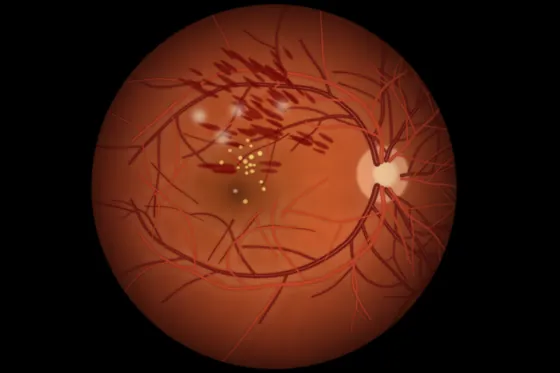
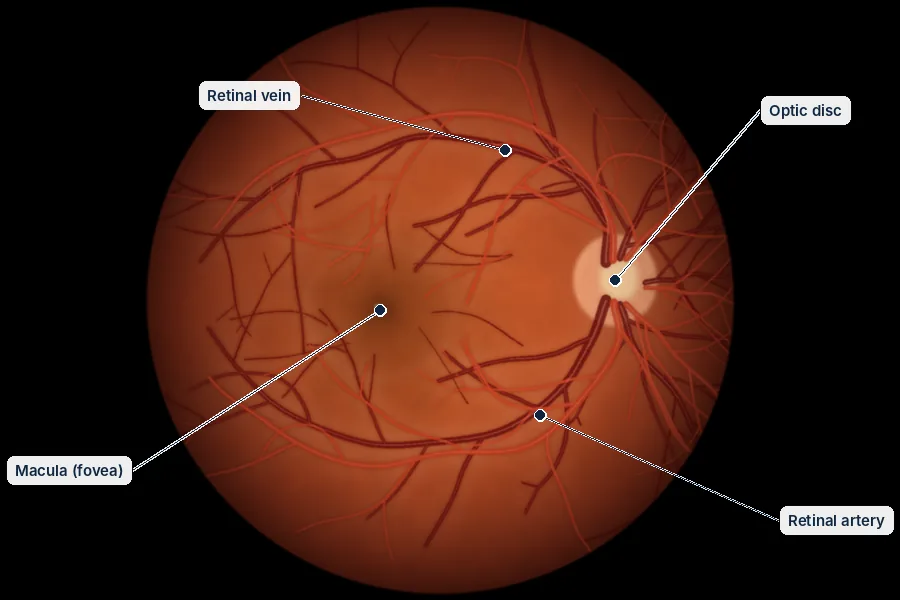
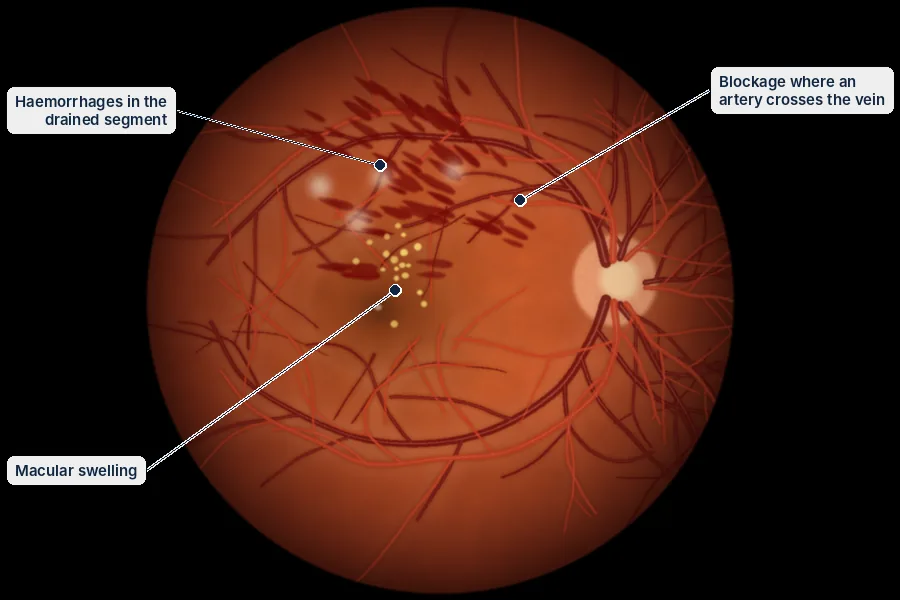
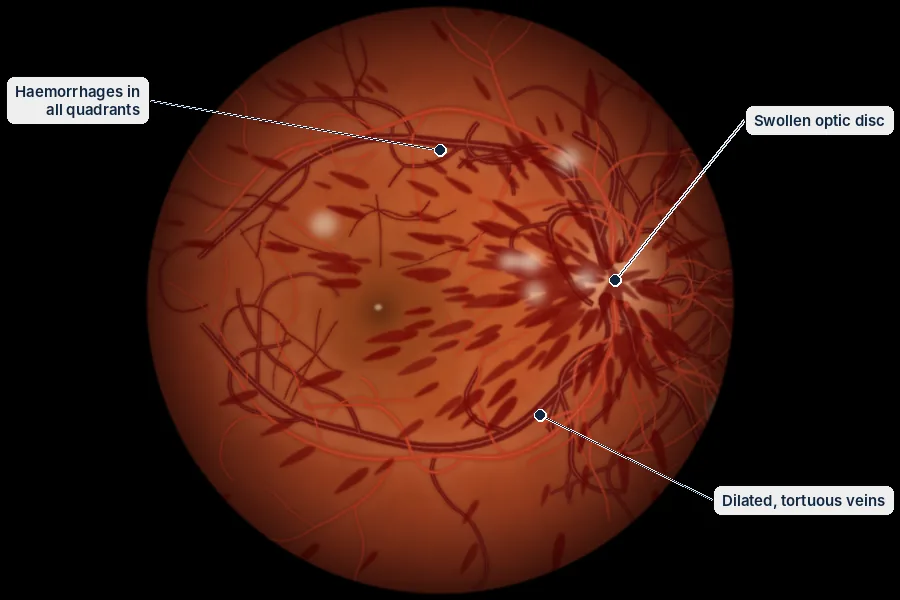
A blocked vein causes bleeding and swelling in the part of the retina it drains.
Simplified diagrams for patient education, not to scale.
Understanding the risks
Every procedure carries some risk. These are approximate rates from published studies, grouped by how often they happen. They are averages, not a prediction for you; Dr Weaver will discuss your own risks before any treatment.
Aftercare guides| Risk | Approximate rate |
|---|---|
| Common, usually temporary or manageable | |
| Brief rise in eye pressure | Common, settles within minutes to hours |
| Red spot on the white of the eye or new floaters | Common and harmless, settles in days |
| Rare but serious | |
| Infection inside the eye (endophthalmitis) | About 1 in 2,000–3,000 injections |
| Retinal tear or detachment | Rare, about 1 in 5,000–10,000 injections; the risk adds up over many injections |
| Injury to the lens (cataract) | Rare, about 1 in 10,000 injections or fewer |
Everything you need to know
Tap a topic to open it.
Overview
Dr Weaver treats blocked veins in the retina at his rooms in Robina and Tweed Heads. Eye injections and laser are given in the rooms, with Medicare rebates for eligible patients.
What is a retinal vein occlusion?
A retinal vein occlusion happens when one of the veins draining blood from the retina becomes blocked. Blood and fluid back up and leak into the retina, much like a blocked drain.
If a smaller branch vein is blocked (a branch retinal vein occlusion), only part of the retina is affected. If the main vein is blocked (a central retinal vein occlusion), the whole retina is affected. There is more bleeding and swelling, and vision loss is usually worse.
Who is at risk?
- High blood pressure, the most important risk
- Diabetes
- High cholesterol
- Glaucoma (raised pressure in the eye)
- Conditions that make the blood thicker, such as polycythaemia or multiple myeloma
- Clotting disorders, which matter more in younger people
- Heart and blood vessel disease
Symptoms
- Sudden blurring or loss of vision, usually painless and often noticed on waking
- A missing patch in part of your vision
- Distorted central vision if the macula is affected
- In severe cases, a large loss of central vision
Treatment
Your general health. Finding and treating high blood pressure, diabetes, high cholesterol and other risks is an essential part of care. It also lowers the chance of the other eye being affected. Blood tests and heart checks are arranged with your GP when needed.
Eye injections are the main treatment for swelling at the centre of the retina (macular oedema) after either type of vein blockage. Regular injections reduce the swelling, often improve vision and help prevent abnormal new vessels from growing. They are given in the rooms at Robina and Tweed Heads.
A long-acting steroid implant may suit some people, particularly those who have already had cataract surgery, or whose eye does not respond well to other injections.
Laser. If the blockage has starved the retina of blood and abnormal new vessels start to grow, laser is used to stop them. This helps prevent bleeding inside the eye and a painful type of glaucoma.
What to expect
How well you see depends on how much vision was lost at the start, how much of the retina was starved of blood, and how the eye responds to treatment. Many people with a branch vein blockage recover useful central vision with treatment. Results are less certain after a main vein blockage, especially a severe one. Early treatment and good control of blood pressure, sugar and cholesterol give the best chance.
You may also want to read
Talk to Dr Weaver about your eyes
A referral from your GP or optometrist is needed to claim Medicare rebates. Our team can help with bookings at Robina and Tweed Heads.