
Glaucoma & MIGSGold Coast & Tweed Heads
Glaucoma damages the optic nerve, usually with raised eye pressure. For suitable people having cataract surgery, MIGS can help lower pressure at the same time.
- Combined with cataract surgery
- Aims to lower eye pressure
- Day surgery
The key facts
What you may notice
- Usually no symptoms in the early stages
- Gradual loss of side vision later on
- Often found at a routine eye test
How it is diagnosed
- Eye pressure measurement and gonioscopy (examining the drainage angle)
- OCT scan of the optic nerve
- Visual field testing
How it is treated
- Eye drops or laser to lower eye pressure
- MIGS: a tiny implant or procedure that improves drainage
- Often done during cataract surgery
Recovery
- Similar to recovery from cataract surgery
- Eye drops for about 4 weeks
- Glaucoma drops may be reduced if pressure allows
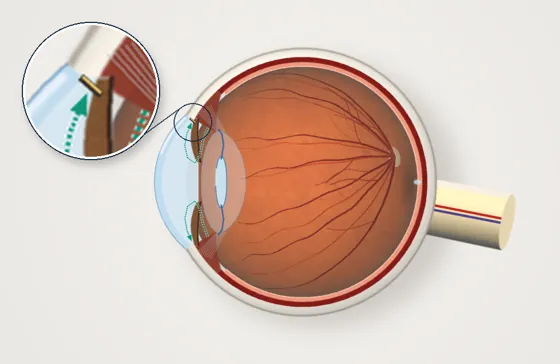
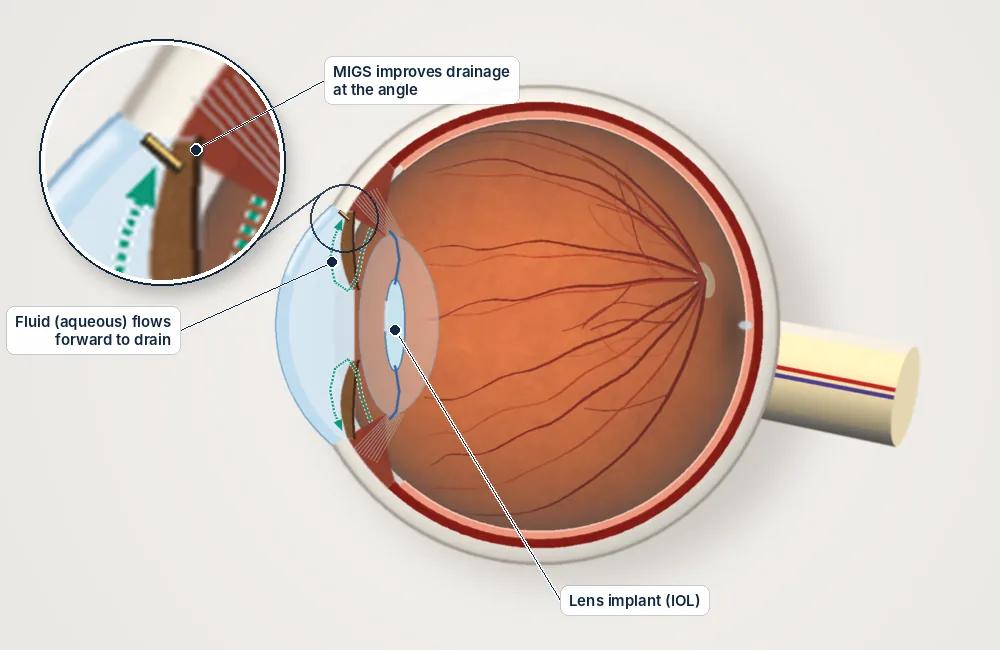
Inside the eye
MIGS uses the same tiny incisions as cataract surgery and improves drainage of fluid at the angle of the eye.
Simplified diagrams for patient education, not to scale.
Understanding the risks
Every procedure carries some risk. These are approximate rates from published studies, grouped by how often they happen. They are averages, not a prediction for you; Dr Weaver will discuss your own risks before any treatment.
Aftercare guides| Risk | Approximate rate |
|---|---|
| Common, usually temporary or manageable | |
| Glaucoma drops still needed | Common; MIGS aims to reduce, not always remove, drops |
| Uncommon | |
| Small bleed in the front of the eye | Can occur; usually clears within days to weeks |
| Temporary rise in eye pressure | Can occur; usually treated with drops |
| Swelling at the macula (CMO) | About 1–2 in 100, usually treated with drops |
| Rare but serious | |
| Infection inside the eye (endophthalmitis) | About 1 in 1,000–2,000 |
Everything you need to know
Tap a topic to open it.
What is glaucoma?
Glaucoma is a group of conditions in which the optic nerve is gradually damaged, most often in association with raised pressure inside the eye. Side vision is usually affected first, and most people notice nothing until the disease is advanced. Vision lost to glaucoma cannot be restored, so treatment aims to lower eye pressure and protect the vision you have.
What is MIGS?
Minimally invasive glaucoma surgery (MIGS) describes procedures that improve the eye’s natural drainage of fluid (aqueous) through tiny incisions, often by placing a very small implant in the drainage angle. Because MIGS uses the same small incisions as cataract surgery, the two can be done together in one operation, adding only a few minutes.
Who may be suitable?
- People with mild to moderate open-angle glaucoma who also need cataract surgery
- People who would like to reduce the number of glaucoma drops they use
- People who have side effects from drops, or find them hard to use
More advanced glaucoma may need a different type of glaucoma surgery. Dr Weaver will discuss which approach suits your eye.
The procedure
Combined surgery is a day procedure under local anaesthetic with sedation. The cataract is removed and a lens implant placed, then the MIGS procedure is performed through the same incisions.
After surgery
- Eye drops for about 4 weeks, as with cataract surgery
- Continue your glaucoma drops until Dr Weaver advises a change
- Eye pressure is checked at each follow-up visit
- A small amount of bleeding in the front of the eye can blur vision for the first few days
Realistic expectations
MIGS usually lowers eye pressure modestly and can reduce the number of drops needed, but not everyone can stop their drops. Glaucoma still needs regular monitoring for life, with pressure checks, OCT scans and visual field tests.
You may also want to read
Talk to Dr Weaver about your eyes
A referral from your GP or optometrist is needed to claim Medicare rebates. Our team can help with bookings at Robina and Tweed Heads.