
Reducing reliance on glassesGold Coast & Tweed Heads
After 40 the focusing lens inside the eye stiffens. Lens-based surgery can reduce how often you need glasses.
- Presbyopia after 40
- Refractive lens exchange
- Self-funded
The key facts
What you may notice
- Holding your phone further away
- Needing reading glasses
- Juggling distance and reading glasses
How it is diagnosed
- Refraction and full eye health check
- Biometry and corneal tomography (Pentacam)
- OCT scan of the macula
How it is treated
- Refractive lens exchange replaces the natural lens
- Lens choice is matched to your lifestyle
- A cataract cannot form after the lens is replaced
Recovery
- Each eye treated separately, about 1–2 weeks apart
- Most people resume usual activities within days
- Not covered by health funds; a written quote is provided

Dr Travers Weaver
Dr Weaver uses the same technique as for cataract surgery. He is also a retinal surgeon, so he can treat retinal problems if they occur.
- FRANZCOSpecialist eye surgeon
- 2 extra yearsRetinal surgery training, Vancouver
- About 1,000Operations a year
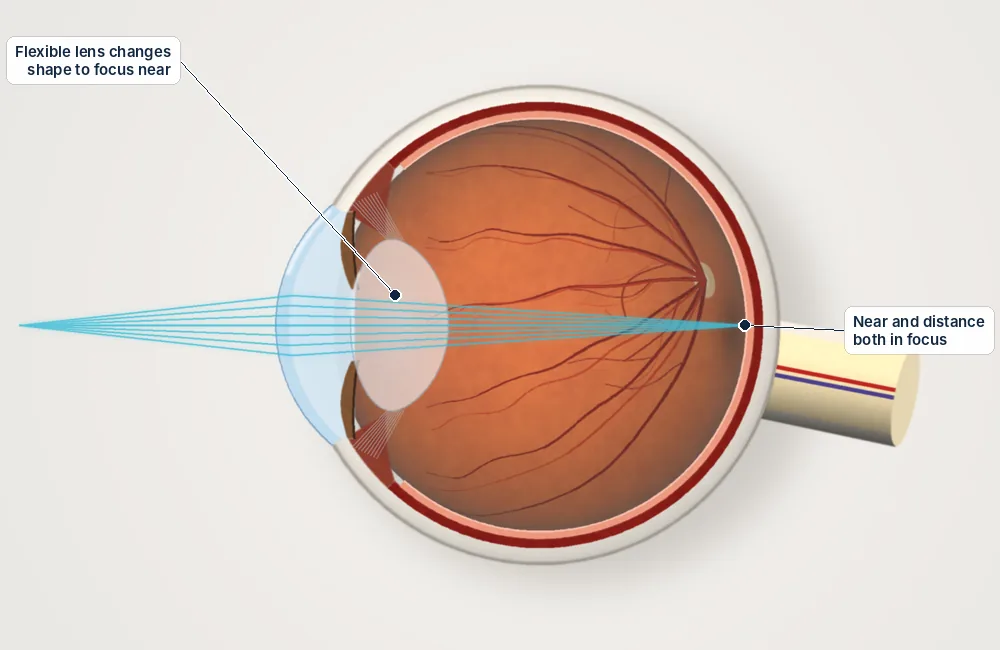
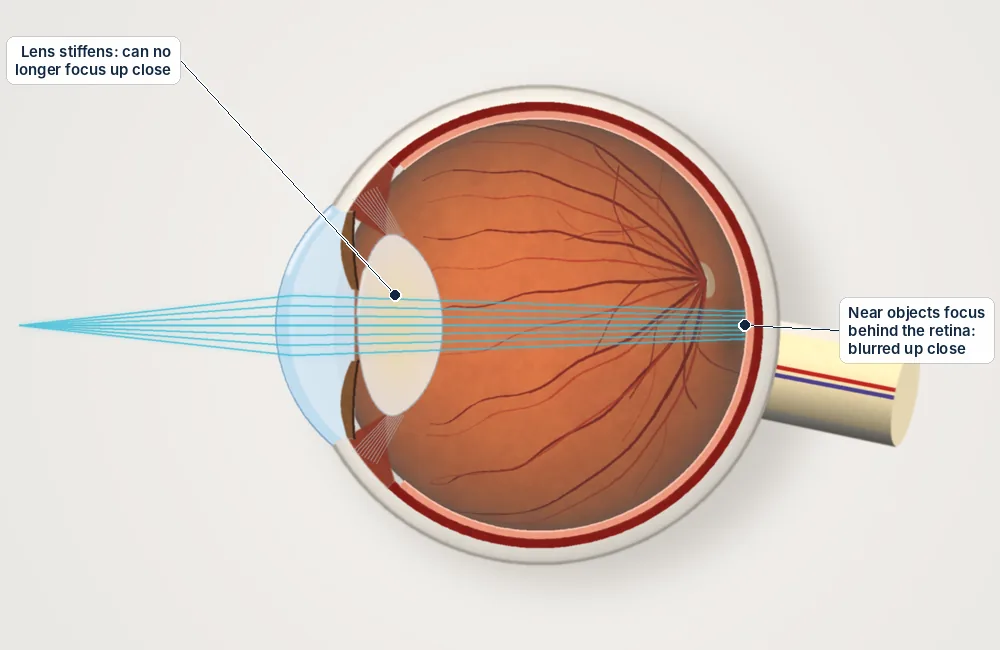
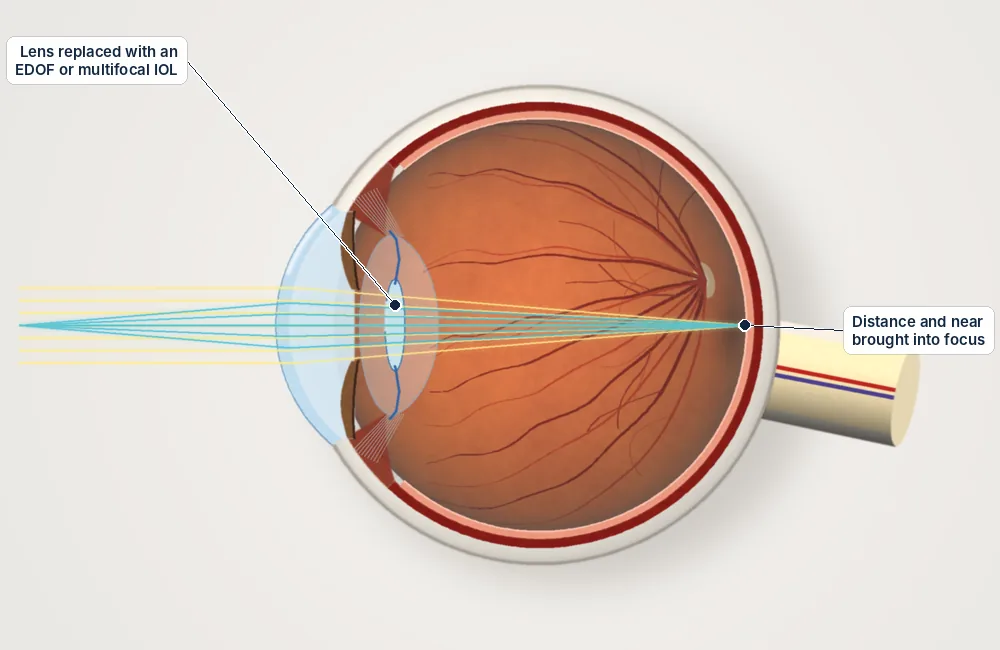
Inside the eye
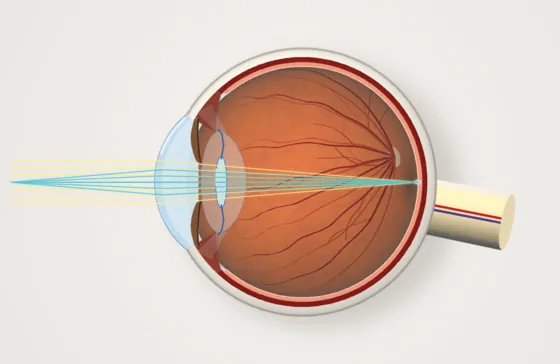
Presbyopia happens because the natural lens stiffens; an extended-range lens implant can widen the range of focus.
Simplified diagrams for patient education, not to scale.
Understanding the risks
Every procedure carries some risk. These are approximate rates from published studies, grouped by how often they happen. They are averages, not a prediction for you; Dr Weaver will discuss your own risks before any treatment.
Aftercare guides| Risk | Approximate rate |
|---|---|
| Common, usually temporary or manageable | |
| Halos or glare around lights at night | Common at first with multifocal and EDOF lenses |
| Uncommon | |
| Glasses still needed for some tasks | Possible, depending on the lens |
| Rare but serious | |
| Infection inside the eye (endophthalmitis) | About 1 in 1,000–2,000 |
| Retinal detachment | Less than 1 in 100; higher if short-sighted |
Everything you need to know
Tap a topic to open it.
Overview
Dr Weaver offers refractive lens exchange (RLE) for people over 40 who want to rely less on glasses or contact lenses. Once reading vision starts to fade with age, RLE can correct both distance and reading focus. This is why it may suit some people over 40 better than laser eye surgery. Laser eye surgery is still a good option for many people, and Dr Weaver will talk with you about which approach suits your eyes.
Why reading vision changes after 40
Between about 40 and 50, most people find that reading gets harder. You hold things further away, struggle with small print, or need reading glasses for the first time. This is called presbyopia. The natural lens inside the eye slowly stiffens and can no longer change focus between far and near.
Laser eye surgery does not fix this. It reshapes the front of the eye to correct distance vision, but it cannot make the lens focus up close again. People over 40 who have laser surgery for distance will usually still need reading glasses, unless one eye is deliberately set for reading (monovision). For some people in their 40s and 50s, this makes RLE a more complete option.
Why RLE may suit some people after 40
- Helps with reading as well as distance: the stiffened natural lens is replaced with a lens designed to focus at more than one distance.
- Long-lasting: the lens implant does not change with age, although other parts of the eye can.
- No cataract later in that eye: the natural lens has been removed, so a cataract cannot form.
- Suits stronger prescriptions: people who are too short-sighted or long-sighted for laser surgery can often have RLE.
- Corrects astigmatism at the same time, with a toric lens
- No tissue is removed from the cornea, which matters if your cornea is thin
Who is suitable?
- People aged 40 and over, especially those who already need reading glasses
- People who are quite short-sighted, long-sighted or astigmatic
- People who are not suitable for laser eye surgery
- People nearing cataract age who would like to deal with their glasses and future cataract at the same time
- People wanting a long-term way to rely less on glasses
Lens options
The lens you choose shapes the result. Dr Weaver offers the full range: multifocal lenses for the widest range of focus, extended depth of focus lenses for distance and middle vision with fewer halos, and toric versions that also correct astigmatism. The right lens depends on how you live, your work, what you need to see and your eye measurements.
Try the lens guide on the cataract surgery page for a starting point, then talk through the options with Dr Weaver.
The operation
RLE is done in the same way as cataract surgery. Each eye is done separately as day surgery, with the eye numbed and sedation, about 1 to 2 weeks apart. The operation usually takes about 10 minutes for each eye. Recovery is quick, and most people notice clearer vision within the first few days.
Cost and health fund cover
RLE is performed at Miami Private Hospital and Pacific Private Hospital on the Gold Coast, and at Tweed Day Surgery in Tweed Heads. Because it is a choice to rely less on glasses, private health insurance does not cover it and it is self-funded. You will be given a full written estimate, including the surgeon, anaesthetist and hospital fees, at your appointment.
You may also want to read
Talk to Dr Weaver about your eyes
A referral from your GP or optometrist is needed to claim Medicare rebates. Our team can help with bookings at Robina and Tweed Heads.