
Intravitreal injectionsGold Coast & Tweed Heads
Medicine placed directly into the eye to treat macular degeneration, diabetic eye disease and vein occlusion.
- In the consulting rooms
- Takes a few minutes
- Numbing drops
The key facts
Used for
- Wet macular degeneration
- Diabetic macular oedema
- Retinal vein occlusion
Before treatment
- OCT scan at most visits
- Vision check before each injection
- Eye pressure check
What happens
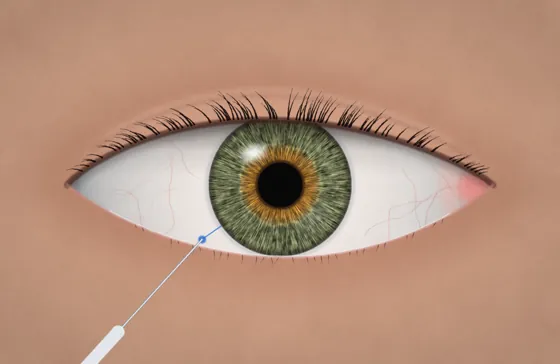
- Numbing drops and a small anaesthetic injection, then antiseptic
- A very fine needle is used; most people feel only brief pressure or nothing at all
- The injection itself takes seconds
Afterwards
- Mild grittiness or a red patch can occur
- Avoid rubbing the eye and swimming for 48 hours
- Call urgently for pain, redness or worsening vision

Dr Travers Weaver
Dr Weaver gives injections in his own rooms at Robina and Tweed Heads, with a scan at each visit to guide the timing of your next injection.
- FRANZCOSpecialist eye surgeon
- 2 extra yearsRetinal surgery training, Vancouver
- About 1,000Operations a year
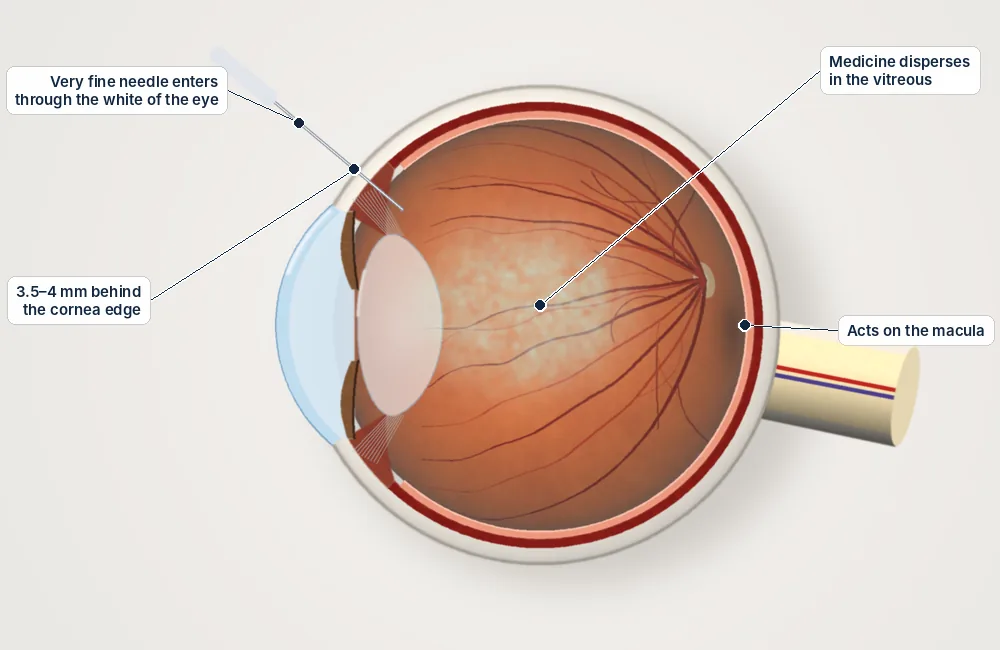
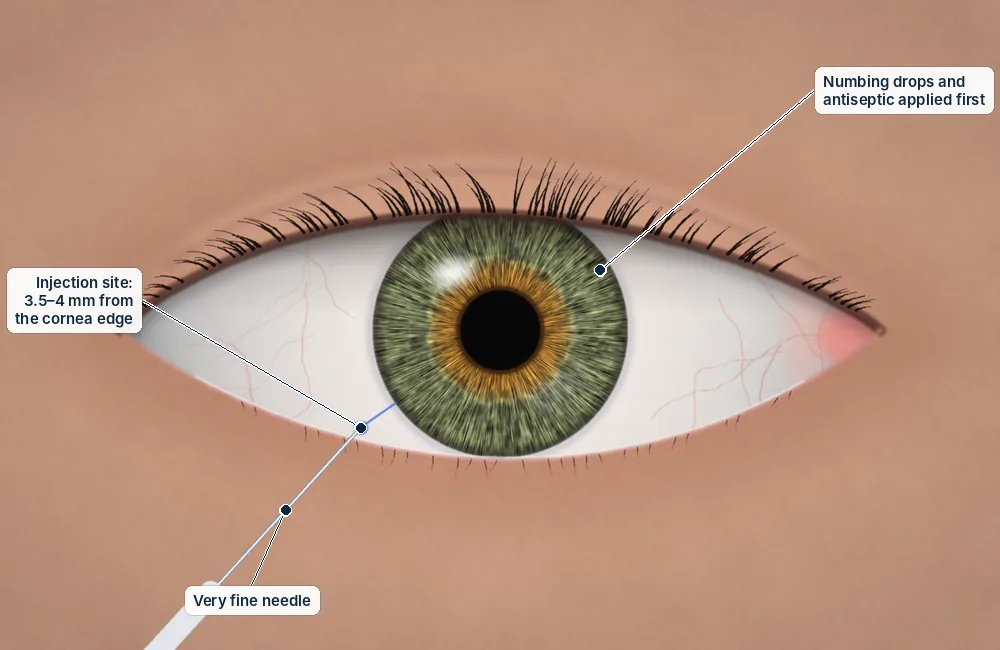
Inside the eye
Medication is injected through the white of the eye, behind the coloured iris, into the vitreous gel.
Simplified diagrams for patient education, not to scale.
Understanding the risks
Every procedure carries some risk. These are approximate rates from published studies, grouped by how often they happen. They are averages, not a prediction for you; Dr Weaver will discuss your own risks before any treatment.
Aftercare guides| Risk | Approximate rate |
|---|---|
| Common, usually temporary or manageable | |
| Brief rise in eye pressure | Common, settles within minutes to hours |
| Red spot on the white of the eye or new floaters | Common and harmless, settles in days |
| Rare but serious | |
| Infection inside the eye (endophthalmitis) | About 1 in 2,000–3,000 injections |
| Retinal tear or detachment | Rare, about 1 in 5,000–10,000 injections; the risk adds up over many injections |
| Injury to the lens (cataract) | Rare, about 1 in 10,000 injections or fewer |
Everything you need to know
Tap a topic to open it.
Overview
Dr Weaver gives eye injections at his rooms in Robina and Tweed Heads. They treat a number of retinal conditions, including wet macular degeneration, swelling of the retina from diabetes, and blocked veins in the retina. Medicare rebates are available for eligible patients.
What is an eye injection?
An eye injection puts medicine directly into the gel that fills the back of the eye (the vitreous). This way the medicine reaches the retina where it is needed, and very little goes into the rest of the body. Most injections use medicines that block a protein called VEGF. VEGF makes abnormal blood vessels grow and leak in conditions such as wet macular degeneration and diabetic eye disease.
Conditions treated
- Wet macular degeneration: injections are the standard treatment. They help keep central vision and, for many people, improve it.
- Swelling of the retina from diabetes (diabetic macular oedema): injections reduce the swelling and often improve vision.
- Blocked veins in the retina (retinal vein occlusion), when the centre of the retina is swollen
- Abnormal blood vessels in very short-sighted eyes
- Other conditions with abnormal blood vessels, after assessment by Dr Weaver
Medicines used
Most injections block VEGF. Several such medicines are available, and some allow longer gaps between injections. Some people, especially those with swelling of the retina, are treated with a long-acting steroid implant. Dr Weaver will explain which medicine suits you and why.
What to expect
The eye is numbed with drops and a small injection of local anaesthetic first. Most people feel brief pressure, or nothing at all, and the injection itself takes only a few seconds. Afterwards the eye often feels gritty and irritated for the rest of the day. This usually settles within 24 hours.
Step by step: what happens at your injection
Getting ready
Numbing drops are put in, then a small injection of local anaesthetic numbs the surface of the eye. The eye is cleaned with antiseptic, usually chlorhexidine.
The injection
A very fine needle puts a tiny amount of medicine, about one drop, through the white of the eye. It takes only a few seconds. Most people feel brief pressure, or nothing at all.
Afterwards
The eye is checked briefly and you can leave soon after. Allow up to an hour for the whole appointment, including scans and getting ready. You may notice a few extra floaters, or a small red patch on the white of the eye. Both are normal and settle within a few days.
After your injection
- Do not rub the eye for the rest of the day
- Use any eye drops exactly as directed
- Avoid swimming, spas and dusty places for 48 hours
- You can drive the next day, once your vision has settled
- Call urgently if your vision suddenly gets much worse, the eye becomes more painful or very red, or you have many more floaters than before. These can be signs of infection inside the eye (endophthalmitis). This is rare but needs treatment the same day.
How many injections will I need?
Most people with wet macular degeneration or diabetic swelling start with one injection a month, usually for 3 months. After that, the gap between injections is gradually stretched out, depending on how your eye responds (treat and extend). A scan at each visit guides the timing.
Some people stay stable with an injection every 3 to 4 months. Others need them more often. Dr Weaver will talk with you about how your eye is responding and what to expect at each visit.
You may also want to read
Talk to Dr Weaver about your eyes
A referral from your GP or optometrist is needed to claim Medicare rebates. Our team can help with bookings at Robina and Tweed Heads.