
Vitreous haemorrhageGold Coast & Tweed Heads
Bleeding into the gel inside the eye, causing sudden haze, dark floaters or loss of vision.
- Urgent assessment
- Ultrasound to check the retina
- Vitrectomy if it does not clear
Symptoms can be urgent. New floaters, flashes, a shadow or sudden vision loss need same-day assessment. Call (07) 5612 5200, or after hours go to the emergency department at Gold Coast University Hospital.
The key facts
What you may notice
- Sudden dark floaters or "smoke"
- Hazy or red-tinged vision
- Sudden loss of vision
How it is diagnosed
- Dilated examination
- B-scan ultrasound to check the retina behind the blood
- Tests for the cause, such as diabetes
How it is treated
- Ultrasound scan to check the retina behind the blood
- Treat the cause: tear, diabetes or vein occlusion
- Vitrectomy to clear blood that does not settle
Recovery
- Sleeping with the head raised can help blood settle
- Avoid heavy lifting in the early stages
- Vision often improves as the blood clears

Dr Travers Weaver
Dr Weaver can assess bleeding with ultrasound in his rooms, and performs vitrectomy himself when the blood does not clear or the retina is at risk.
- FRANZCOSpecialist eye surgeon
- 2 extra yearsRetinal surgery training, Vancouver
- About 1,000Operations a year
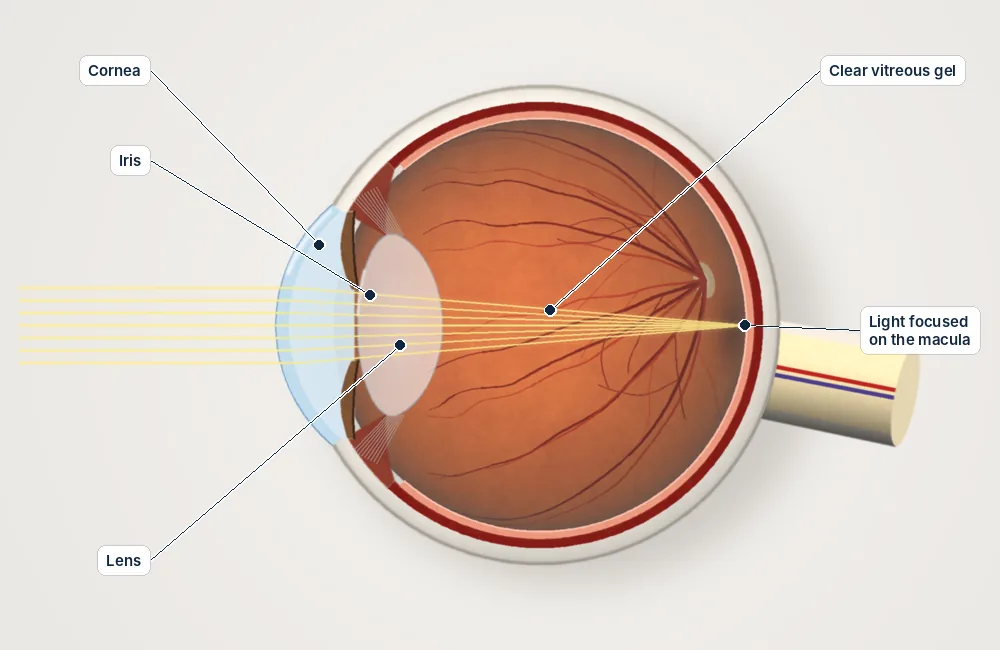
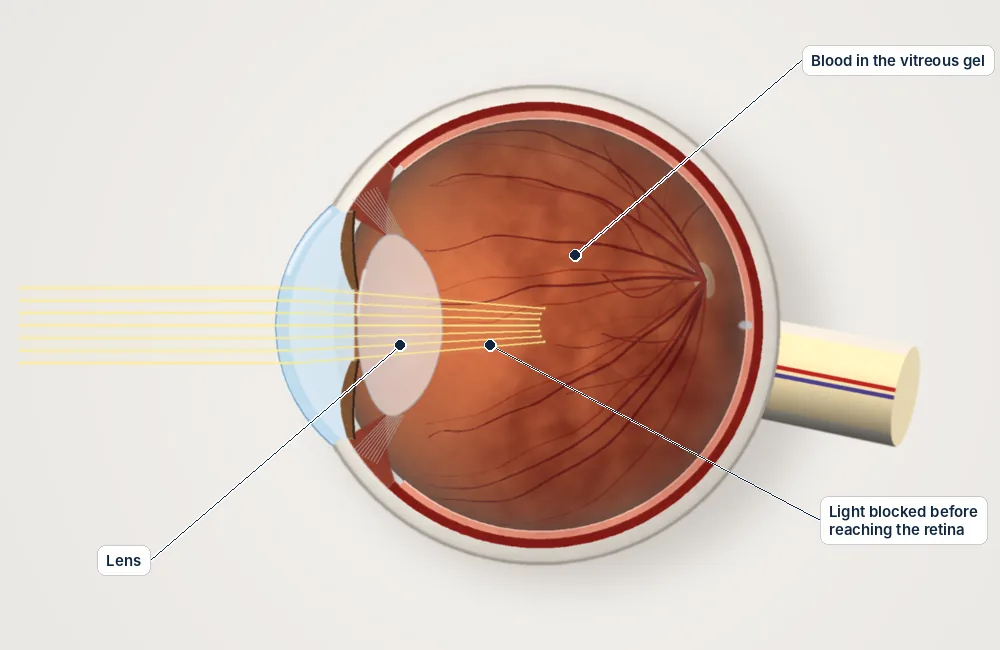
Inside the eye
Blood in the vitreous gel blocks light from reaching the retina.
Simplified diagrams for patient education, not to scale.
Understanding the risks
Every procedure carries some risk. These are approximate rates from published studies, grouped by how often they happen. They are averages, not a prediction for you; Dr Weaver will discuss your own risks before any treatment.
Aftercare guides| Risk | Approximate rate |
|---|---|
| Common, usually temporary or manageable | |
| Cataract developing after vitrectomy | Most people over 50, within 1–2 years |
| Raised eye pressure | Common, usually temporary and treated with drops |
| Uncommon | |
| Retinal tear or detachment | About 1–2 in 100 |
| Rare but serious | |
| Infection inside the eye (endophthalmitis) | About 1 in 2,000–3,000 |
Everything you need to know
Tap a topic to open it.
Overview
Dr Weaver sees people with bleeding inside the eye at his rooms in Robina and Tweed Heads, usually at short notice. If surgery is needed, he performs it at Miami Private Hospital, Pacific Private Hospital or Tweed Day Surgery.
What is a vitreous haemorrhage?
A vitreous haemorrhage is bleeding into the clear gel (the vitreous) that fills the back of the eye. The blood blocks light from reaching the retina. You may notice sudden blurring, dark floaters, cobwebs or a red haze. If the bleeding is heavy, you may only be able to tell light from dark.
Causes
- Diabetic eye disease: the most common cause. Fragile new blood vessels grow on the retina and break easily (proliferative diabetic retinopathy).
- A retinal tear or detachment: a blood vessel tears along with the retina. This needs urgent treatment.
- A blocked vein in the retina (retinal vein occlusion)
- Macular degeneration: abnormal vessels under the retina can bleed forward into the gel.
- Straining: a sudden rise in pressure from coughing, straining or heavy lifting (Valsalva retinopathy).
- An injury to the eye
- Bleeding around the brain can rarely cause bleeding inside the eye (Terson syndrome).
Tests
When blood blocks the view, an ultrasound scan (B-scan) is used to look at the retina behind it. This checks for a retinal detachment, which needs urgent surgery even though the blood is still there. Questions about your general health help find the cause and guide treatment.
Treatment
Waiting for the blood to clear. In some people, the blood slowly clears over weeks to months. This is more likely in younger people, or once the cause has been treated. Sleeping with your head raised helps. You will be checked closely during this time. Do not stop any blood-thinning medicine unless the doctor who prescribed it agrees.
Vitrectomy surgery is recommended when:
- The blood has not cleared after 1 to 3 months
- The retina is detached, or might be
- Your other eye also has poor vision
- You need to keep taking blood thinners
- You need your sight back quickly, for example for work or because it is your only good eye
During surgery, the blood is removed and the retina is checked. Any tears or abnormal vessels are treated with laser, and the cause is dealt with. How well you see afterwards depends on how much the underlying condition has damaged the retina.
You may also want to read
Talk to Dr Weaver about your eyes
A referral from your GP or optometrist is needed to claim Medicare rebates. Our team can help with bookings at Robina and Tweed Heads.