
Laser treatmentsGold Coast & Tweed Heads
YAG laser capsulotomy, laser peripheral iridotomy, selective laser trabeculoplasty (SLT) and retinal laser, usually performed in the rooms.
- YAG capsulotomy
- Iridotomy & SLT
- Retinal laser
The key facts
Used for
- Cloudy capsule after cataract surgery (YAG capsulotomy)
- Narrow drainage angles (laser peripheral iridotomy)
- Glaucoma or raised eye pressure (SLT), and retinal tears
Before treatment
- Vision and eye pressure check
- Dilating drops before YAG capsulotomy or retinal laser
- Pressure-lowering or pupil-constricting drops before some lasers
What happens
- Numbing drops and, for some lasers, a contact lens on the eye
- You sit at a laser microscope, much like an eye examination
- Most treatments take 5–15 minutes
Afterwards
- Vision may be blurry for a few hours
- Eye pressure is often checked after the laser
- Most people return to usual activities the next day
Inside the eye
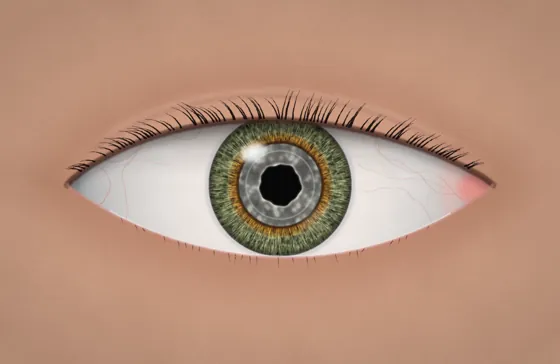
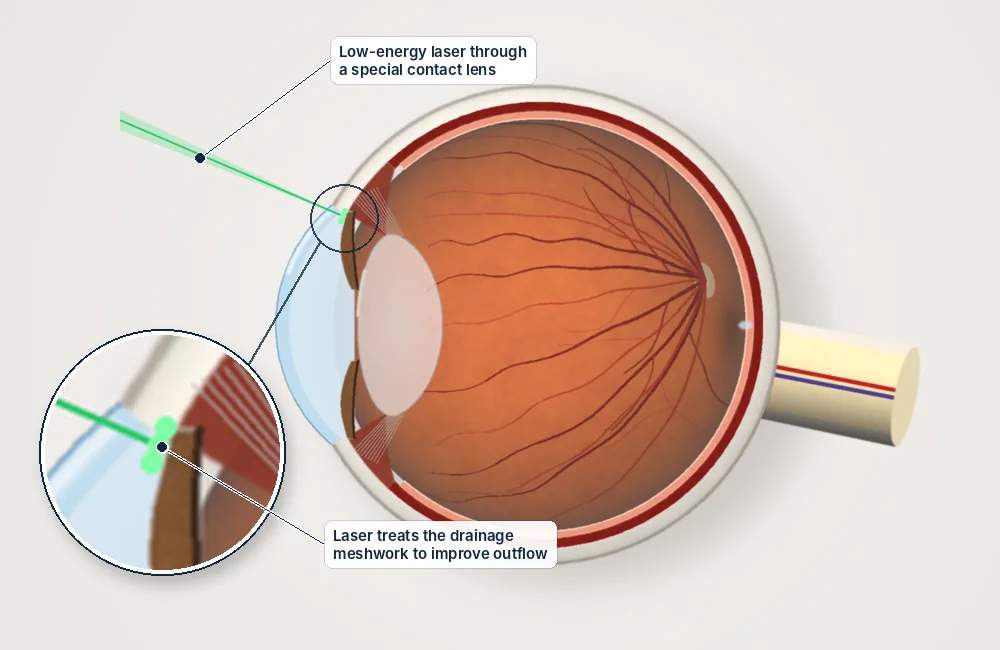
Laser treatments are done at a microscope in the rooms: a YAG laser clears a cloudy capsule, an iridotomy opens a small channel in the iris, and SLT treats the drainage meshwork.
Simplified diagrams for patient education, not to scale.
Understanding the risks
Every procedure carries some risk. These are approximate rates from published studies, grouped by how often they happen. They are averages, not a prediction for you; Dr Weaver will discuss your own risks before any treatment.
Aftercare guides| Risk | Approximate rate |
|---|---|
| Common, usually temporary or manageable | |
| YAG: brief rise in eye pressure | Common; usually settles, sometimes with drops |
| YAG: new floaters | Common; usually settle over weeks |
| Iridotomy: small bleed from the iris or brief blur | Common; usually settles the same day |
| SLT: effect wears off over time | Common over several years; it can be repeated |
| Uncommon | |
| YAG: retinal detachment | Uncommon, about 1 in 100 or less |
| Iridotomy: glare or a line of light | Uncommon |
| SLT: mild inflammation or pressure rise | Can occur; usually settles within days |
Everything you need to know
Tap a topic to open it.
YAG laser capsulotomy
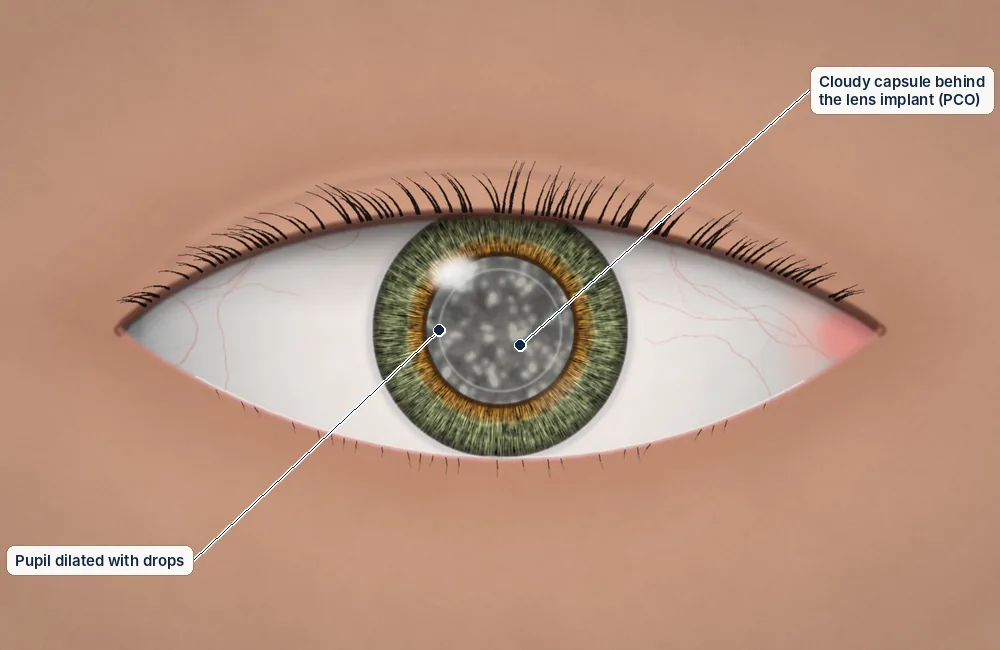
After cataract surgery, the thin capsule that holds the lens implant can slowly become cloudy. This is called posterior capsule opacification (PCO). It happens in up to half of people in the years after surgery, and causes blurred or hazy vision and glare, much like the original cataract. It is not the cataract coming back.
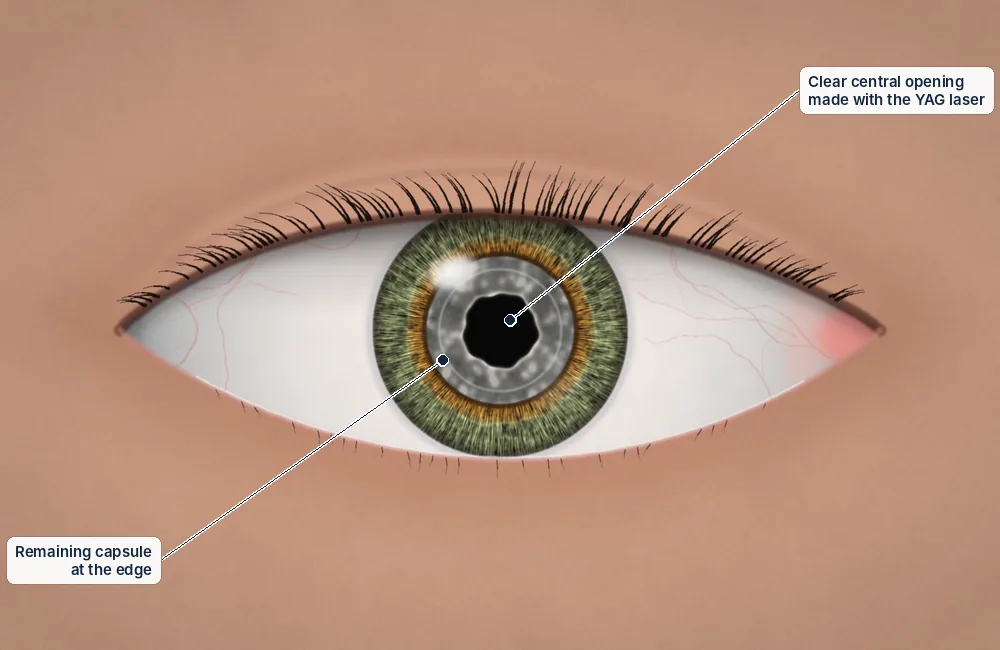
A YAG laser makes a small clear opening in the centre of the capsule. Your pupil is dilated with drops, and the laser takes only a few minutes. Most people notice clearer vision within a day. The capsule does not grow back once it has been opened.
Laser peripheral iridotomy
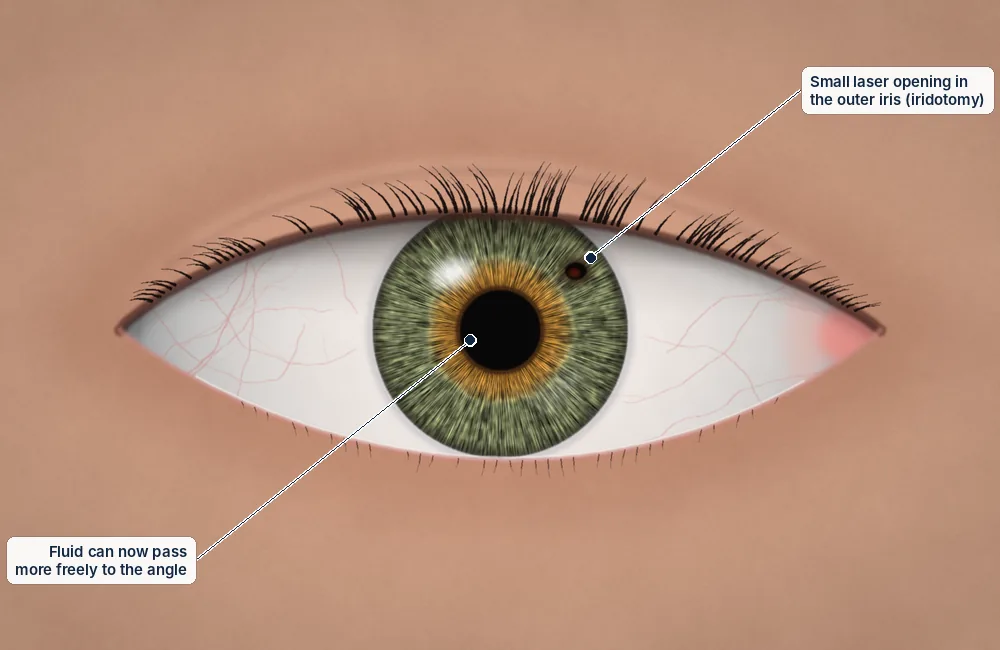
In some eyes the drainage angle, where fluid leaves the eye, is narrow. This raises the risk of angle-closure glaucoma, in which eye pressure can rise suddenly. A laser peripheral iridotomy makes a tiny opening in the outer part of the iris so fluid can pass more freely and the angle can open.
Drops are used to make the pupil small, and a contact lens is placed on the eye. You may feel a few sharp taps. Afterwards the eye can ache and vision may be blurred for a few hours. Both eyes are often treated, usually on different days.
Selective laser trabeculoplasty (SLT)
SLT is a gentle, low-energy laser applied to the drainage meshwork of the eye to help fluid leave more easily and lower eye pressure. It can be used as a first treatment for open-angle glaucoma or raised eye pressure, or alongside eye drops.
The treatment takes about 5–10 minutes with a contact lens on the eye. The pressure-lowering effect develops over 6–8 weeks. SLT may reduce or delay the need for drops, but its effect can wear off over several years, and it can be repeated.
Retinal laser
Laser is also used at the back of the eye: to seal a retinal tear and lower the risk of detachment, and to treat abnormal blood vessels in diabetic retinopathy and retinal vein occlusion.
On the day
- Allow extra time if your pupils need to be dilated
- Bring someone to drive you home if your pupils are dilated
- Keep using your usual eye drops unless Dr Weaver advises otherwise
- Call the rooms if you have increasing pain, worsening vision or a shower of new floaters after laser
You may also want to read
Talk to Dr Weaver about your eyes
A referral from your GP or optometrist is needed to claim Medicare rebates. Our team can help with bookings at Robina and Tweed Heads.