
Retinal tearGold Coast & Tweed Heads
A break in the retina, usually caused by the vitreous gel pulling away. Prompt laser treatment lowers the risk of retinal detachment.
- Urgent assessment
- Laser in the rooms
- Lowers the risk of detachment
Symptoms can be urgent. New floaters, flashes, a shadow or sudden vision loss need same-day assessment. Call (07) 5612 5200, or after hours go to the emergency department at Gold Coast University Hospital.
The key facts
What you may notice
- A sudden shower of new floaters
- Flashes of light at the edge of vision
- A shadow, which may mean a detachment
How it is diagnosed
- Dilated examination with gentle indentation
- Wide-field retinal photography
- Ultrasound if blood blocks the view
How it is treated
- Laser in the rooms seals the tear
- Usually the same day or within a day or two
- Surgery if fluid has spread under the retina
Recovery
- Laser takes about 5–10 minutes
- The laser scar strengthens over about 2 weeks
- A follow-up check in a few weeks

Dr Travers Weaver
Dr Weaver treats retinal tears with laser in his rooms, usually on the same day or within a day or two, and repairs a detachment surgically if one develops.
- FRANZCOSpecialist eye surgeon
- 2 extra yearsRetinal surgery training, Vancouver
- About 1,000Operations a year
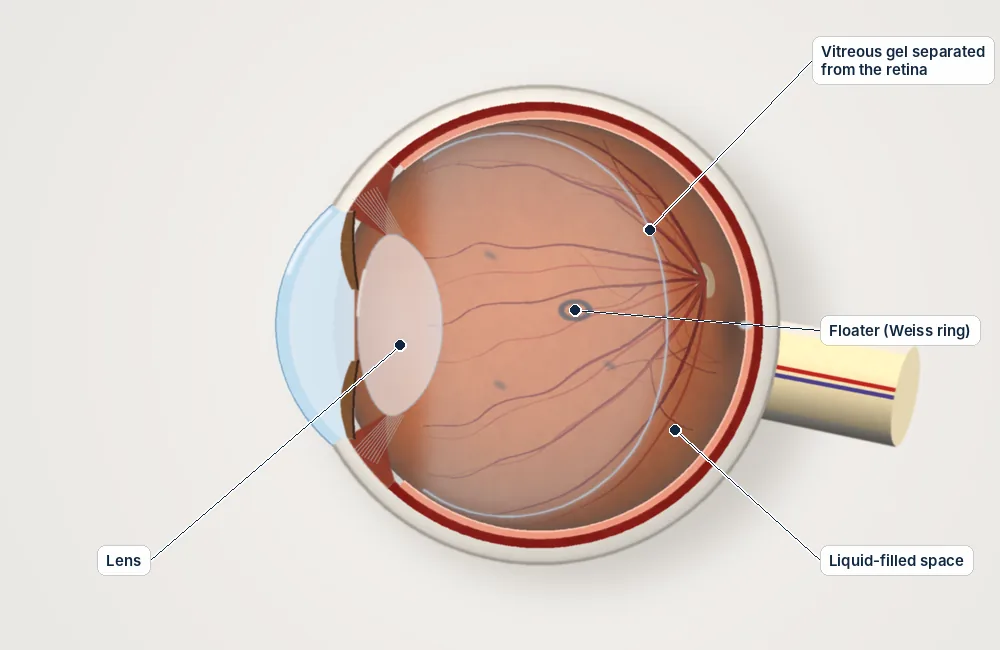
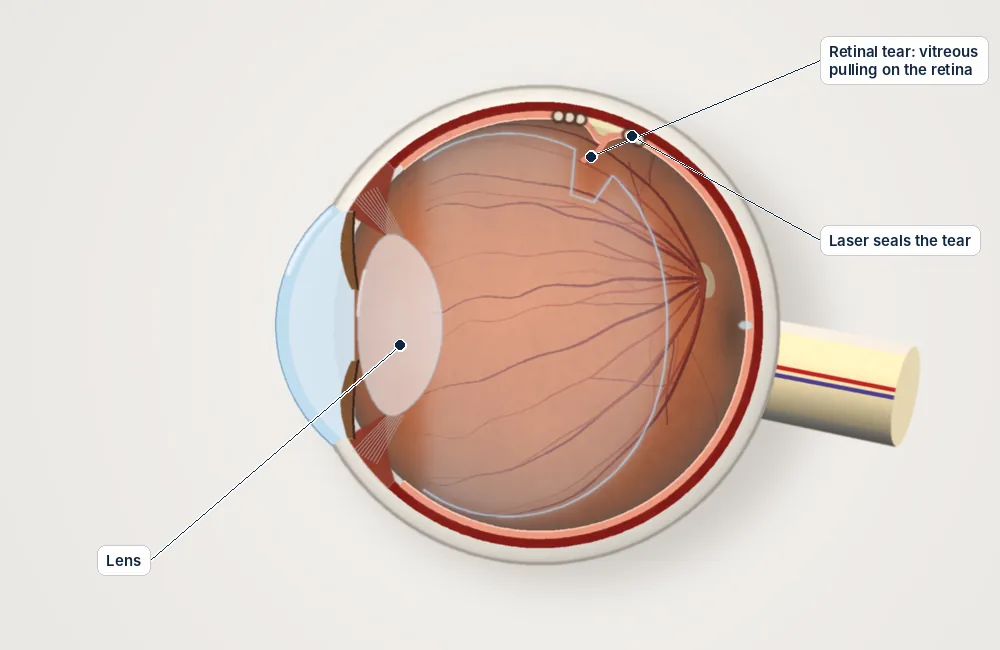
Inside the eye
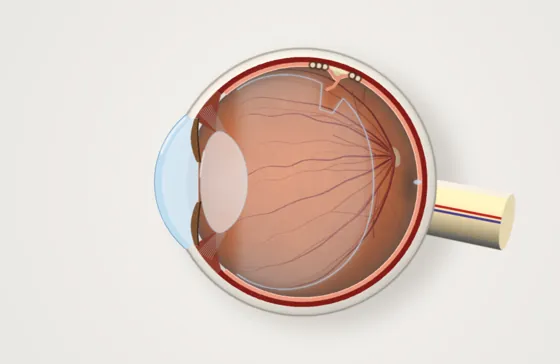
When the vitreous gel pulls away it can tear the retina; laser seals the tear to help prevent a detachment.
Simplified diagrams for patient education, not to scale.
Understanding the risks
Every procedure carries some risk. These are approximate rates from published studies, grouped by how often they happen. They are averages, not a prediction for you; Dr Weaver will discuss your own risks before any treatment.
Aftercare guides| Risk | Approximate rate |
|---|---|
| Common, usually temporary or manageable | |
| Brief discomfort or dazzle during laser | Common, settles quickly |
| Uncommon | |
| New tears needing more laser | About 5–10 in 100 |
| Retinal detachment despite laser | Uncommon |
Everything you need to know
Tap a topic to open it.
What is a retinal tear?
A retinal tear is a break in the retina, the light-sensing layer at the back of the eye. Most tears happen when the vitreous gel separates from the retina (a posterior vitreous detachment) and pulls a piece of retina with it. This happens in about 1 in 7 people with a symptomatic PVD. Fluid can then pass through the tear and lift the retina off, causing a retinal detachment.
Symptoms
- A sudden shower of new floaters, sometimes like smoke or a swarm of dots
- Flashes of light, often at the edge of vision
- A shadow or curtain, which may mean the retina has started to detach
During business hours call the rooms on (07) 5612 5200 the same day. After hours, go to the emergency department at Gold Coast University Hospital.
Who is at higher risk?
- Short-sightedness (myopia)
- Lattice degeneration, a thinning of the outer retina
- A previous tear or detachment in either eye, or a family history of detachment
- Previous cataract surgery
- Eye injury
Laser treatment
Most tears are treated with laser (retinopexy) in the rooms, usually on the same day or within a day or two. After numbing and dilating drops, a contact lens is placed on the eye and the laser makes a ring of small burns around the tear. These form scars that seal the retina down. It takes about 5–10 minutes; you may see bright flashes and feel brief discomfort. Freezing treatment (cryotherapy) is sometimes used instead. If fluid has already spread under the retina, surgery may be needed.
After laser
The laser scar strengthens over about 2 weeks. Most people return to their usual activities straight away, and Dr Weaver will tell you if anything should be avoided. A follow-up examination is arranged in a few weeks to check the seal and look for new tears. Laser lowers the risk of detachment but cannot remove it completely, so know the warning signs and seek help promptly if they change.
You may also want to read
Talk to Dr Weaver about your eyes
A referral from your GP or optometrist is needed to claim Medicare rebates. Our team can help with bookings at Robina and Tweed Heads.