
Posterior vitreous detachmentGold Coast & Tweed Heads
A common age-related change in which the gel separates from the retina. New symptoms always need a check.
- Common from age 50
- Dilated examination
- Check for retinal tears
Symptoms can be urgent. New floaters, flashes, a shadow or sudden vision loss need same-day assessment. Call (07) 5612 5200, or after hours go to the emergency department at Gold Coast University Hospital.
The key facts
What you may notice
- New floaters, often a ring or cobweb
- Brief flashes at the edge of vision
- Floaters that drift as the eye moves
How it is diagnosed
- Dilated examination to exclude a tear
- OCT can show the separated gel
- A repeat check may be advised
How it is treated
- Dilated examination to exclude a retinal tear
- Laser if a tear is found
- Review if no tear is seen
Recovery
- Floaters usually become less noticeable over months
- A repeat check may be recommended
- Return urgently if a shadow or many new floaters appear

Dr Travers Weaver
Dr Weaver examines the whole retina for tears and can treat a tear with laser at the same visit.
- FRANZCOSpecialist eye surgeon
- 2 extra yearsRetinal surgery training, Vancouver
- About 1,000Operations a year
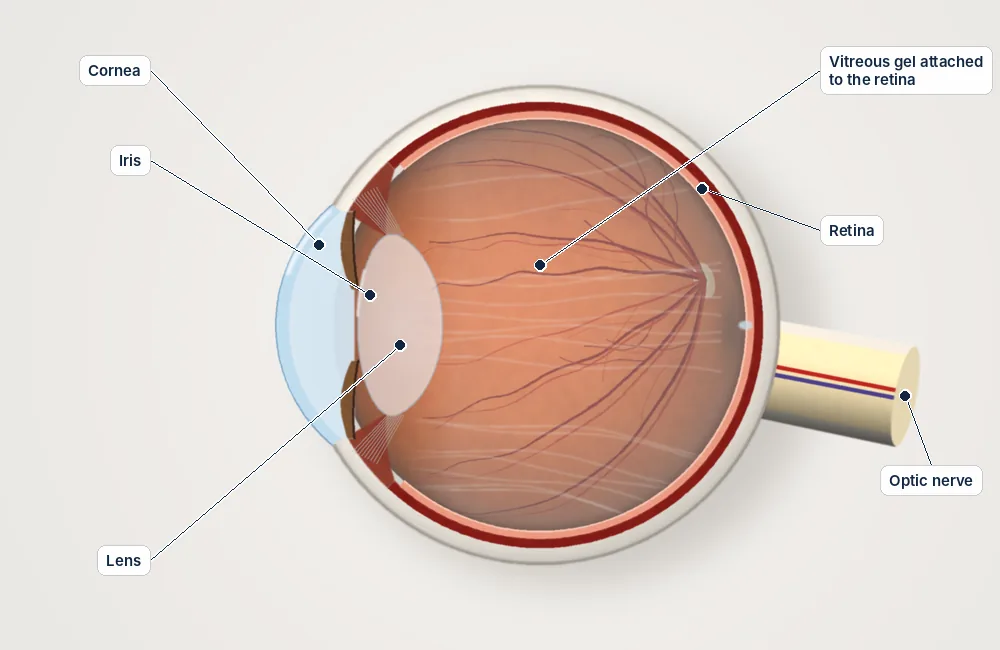
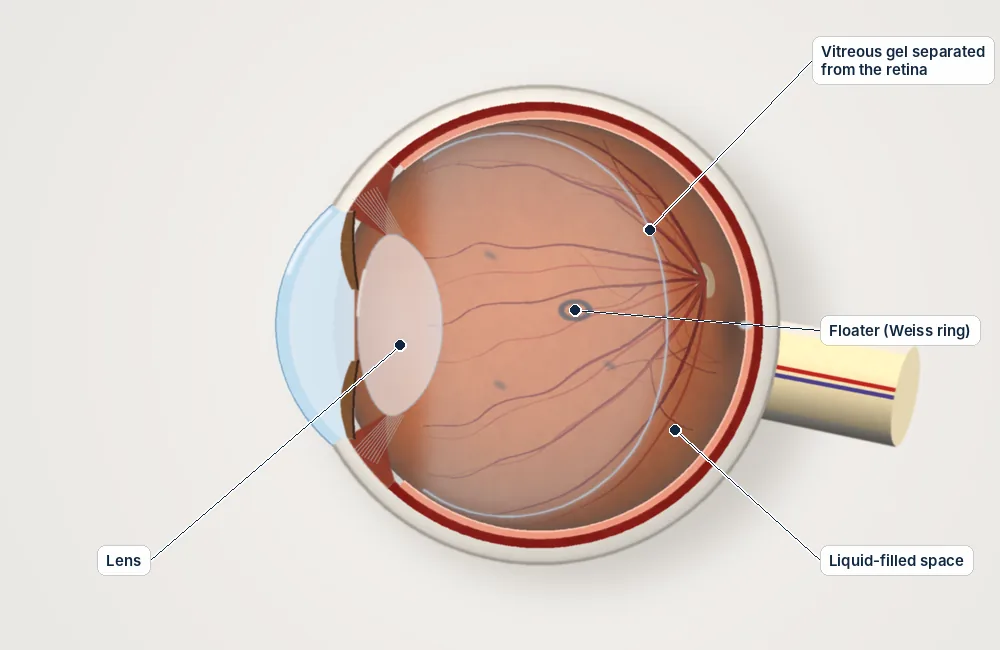
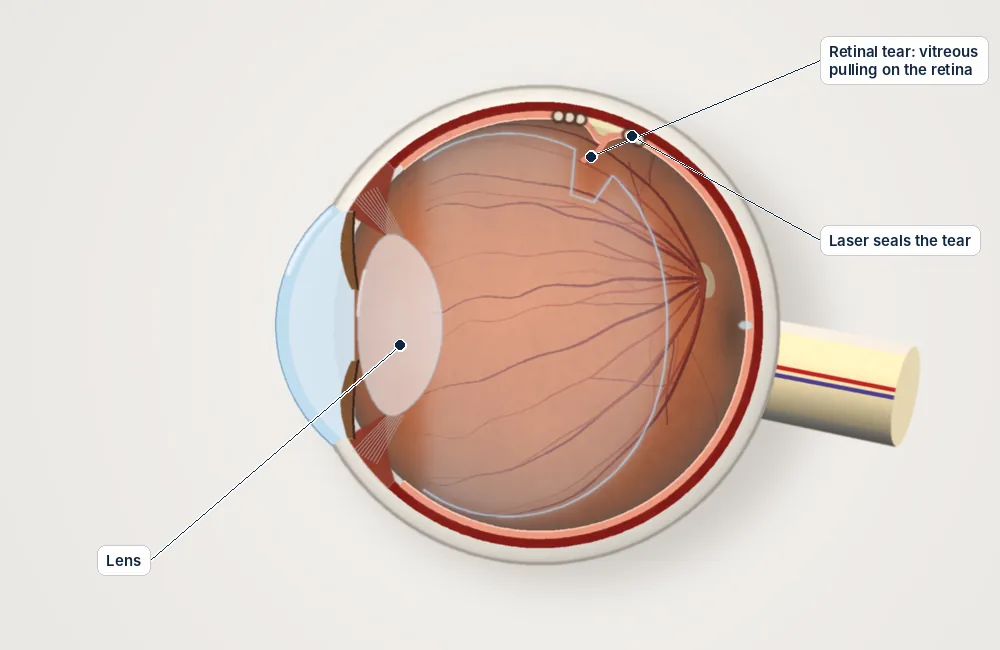
Inside the eye
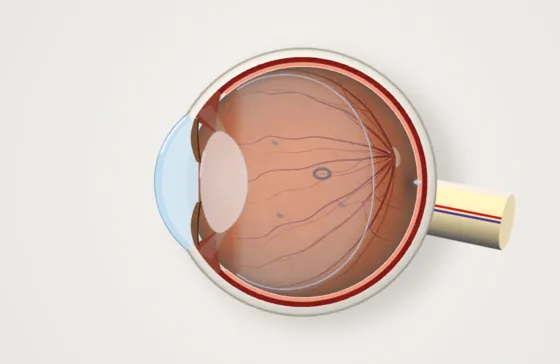
As the vitreous gel separates it can cause floaters and flashes; occasionally it tears the retina.
Simplified diagrams for patient education, not to scale.
Understanding the risks
Every procedure carries some risk. These are approximate rates from published studies, grouped by how often they happen. They are averages, not a prediction for you; Dr Weaver will discuss your own risks before any treatment.
Aftercare guides| Risk | Approximate rate |
|---|---|
| Common, usually temporary or manageable | |
| Retinal tear at the time of a symptomatic PVD | About 1 in 7 |
| Uncommon | |
| New tear in the following 6 weeks | About 3 in 100 |
Everything you need to know
Tap a topic to open it.
Overview
Dr Weaver checks people with a posterior vitreous detachment at his rooms in Robina and Tweed Heads. Most are harmless, but an eye examination soon after symptoms start is important to rule out a retinal tear, which needs laser treatment straight away.
What is a posterior vitreous detachment?
The back of the eye is filled with a clear gel called the vitreous, which is attached to the retina. With age, the gel becomes more watery and shrinks, and eventually it peels away from the retina. This is a posterior vitreous detachment (PVD). It is a normal part of ageing. Most people have one by their 60s or 70s, and short-sighted people tend to have it earlier.
The main concern is whether the gel tears the retina as it pulls away. This happens in about 10 to 15 in every 100 people who notice sudden symptoms.
Symptoms
- Floaters: new dark spots, threads, cobwebs or rings that move around in your vision. A ring-shaped floater is common, caused by the gel coming away from around the optic nerve.
- Flashes of light: brief flashes, often at the edge of your vision, caused by the gel tugging on the retina. They are most noticeable in the dark or when you move your eyes.
- Symptoms usually settle over weeks to months as the gel finishes separating and the brain learns to ignore the floaters.
When is it an emergency?
New floaters or flashes should be checked urgently, ideally within 24 to 48 hours, to rule out a retinal tear. The risk of a tear is highest in the first 6 weeks. Get help the same day if you notice:
- A sudden, heavy shower of new floaters
- Frequent or constant flashes of light
- A dark shadow or curtain, or loss of side vision. This can mean the retina has started to detach.
- Any drop in your vision
Examination and treatment
After drops to widen your pupil, Dr Weaver carefully examines the whole retina, right out to the edges, pressing gently on the eyelid to see the far edge (scleral indentation). If he finds a tear, he can usually treat it with laser at the same visit. This seals the tear and helps prevent a retinal detachment.
If there is no tear, a second check at 4 to 6 weeks is recommended. New tears can occasionally form while the gel is still separating.
A PVD without a tear needs no treatment. The floaters and flashes usually settle with time. If floaters stay and really affect your daily life, vitrectomy surgery is the most effective option. YAG laser is suitable less often and is the least preferred option (see floaters and flashes).
Your other eye
After a PVD in one eye, the other eye often has one within a few years. Dr Weaver will tell you which symptoms to watch for and when to get your other eye checked.
You may also want to read
Talk to Dr Weaver about your eyes
A referral from your GP or optometrist is needed to claim Medicare rebates. Our team can help with bookings at Robina and Tweed Heads.