
Pathological myopiaGold Coast & Tweed Heads
High short-sightedness stretches the eye, thinning the retina and raising the risk of tears, detachment and bleeding at the macula.
- High short-sightedness
- Regular retinal checks
- Injections for myopic CNV
The key facts
What you may notice
- Needing strong glasses or contact lenses
- Sudden distortion or a central blur
- New floaters, flashes or a shadow
How it is diagnosed
- Refraction and eye length measurement
- Dilated examination of the retina
- OCT scan of the macula
How it is treated
- Regular dilated checks of the retina
- Anti-VEGF injections for myopic CNV
- Surgery for tears, detachment or macular holes
Recovery
- Ongoing monitoring is important
- Prompt treatment of CNV protects central vision
- Know the warning signs of retinal detachment
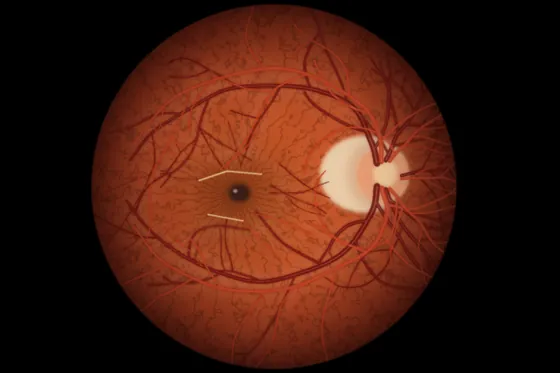
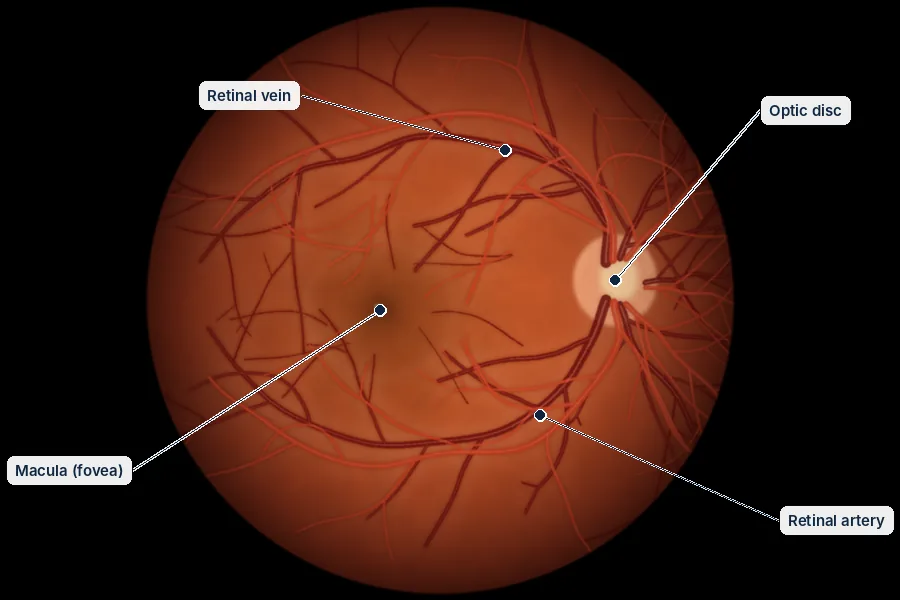
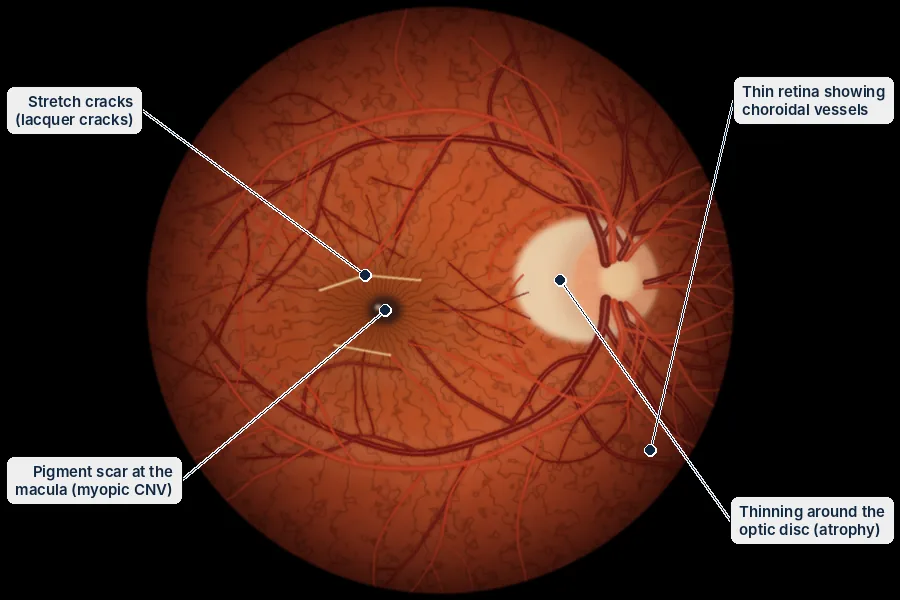
Inside the eye
Stretching thins the retina, showing the choroidal vessels, with atrophy around the disc.
Simplified diagrams for patient education, not to scale.
Understanding the risks
Every procedure carries some risk. These are approximate rates from published studies, grouped by how often they happen. They are averages, not a prediction for you; Dr Weaver will discuss your own risks before any treatment.
Aftercare guides| Risk | Approximate rate |
|---|---|
| Rare but serious | |
| Infection inside the eye (endophthalmitis) | About 1 in 2,000–3,000 injections |
| Retinal tear or detachment | Rare, about 1 in 5,000–10,000 injections; the risk adds up over many injections |
Everything you need to know
Tap a topic to open it.
Overview
In high myopia, usually a prescription of more than −6.00 dioptres, the eye is longer than normal. The stretching thins the retina and choroid and can lead to complications later in life.
Possible complications
- Retinal tears and retinal detachment
- Myopic choroidal neovascularisation (CNV), with bleeding at the macula
- Myopic macular holes and foveoschisis (splitting of the retina)
- Earlier cataract and a higher risk of glaucoma
Treatment
Myopic CNV usually responds well to anti-VEGF injections, often needing fewer injections than macular degeneration. Retinal tears are sealed with laser, and detachments, holes and schisis may need vitrectomy surgery.
Looking after your eyes
Regular dilated eye checks are recommended. Know the warning signs (new floaters, flashes, a shadow or sudden distortion) and seek same-day review if they occur.
You may also want to read
Talk to Dr Weaver about your eyes
A referral from your GP or optometrist is needed to claim Medicare rebates. Our team can help with bookings at Robina and Tweed Heads.