
Ocular trauma reconstructionGold Coast & Tweed Heads
Surgical repair of the eye after injury, from penetrating injuries to foreign bodies inside the eye.
- Urgent care
- Foreign body removal
- Staged reconstruction
Symptoms can be urgent. New floaters, flashes, a shadow or sudden vision loss need same-day assessment. Call (07) 5612 5200, or after hours go to the emergency department at Gold Coast University Hospital.
The key facts
What you may notice
- Pain, redness or reduced vision after an injury
- Something has hit or entered the eye
- A change in the shape of the pupil
How it is diagnosed
- Full examination of the eye
- CT scan if a metal fragment is suspected
- Ultrasound to assess the back of the eye
How it is treated
- Primary repair of the eye wall
- Removal of foreign bodies, damaged lens or blood
- Later reconstruction: iris repair, lens implants or retinal repair
Recovery
- More than one operation is often needed
- Protective eyewear afterwards
- Reports available for work or insurance

Dr Travers Weaver
Dr Weaver repairs injuries to the retina, lens and iris, often in a single planned operation once the eye has settled.
- FRANZCOSpecialist eye surgeon
- 2 extra yearsRetinal surgery training, Vancouver
- About 1,000Operations a year
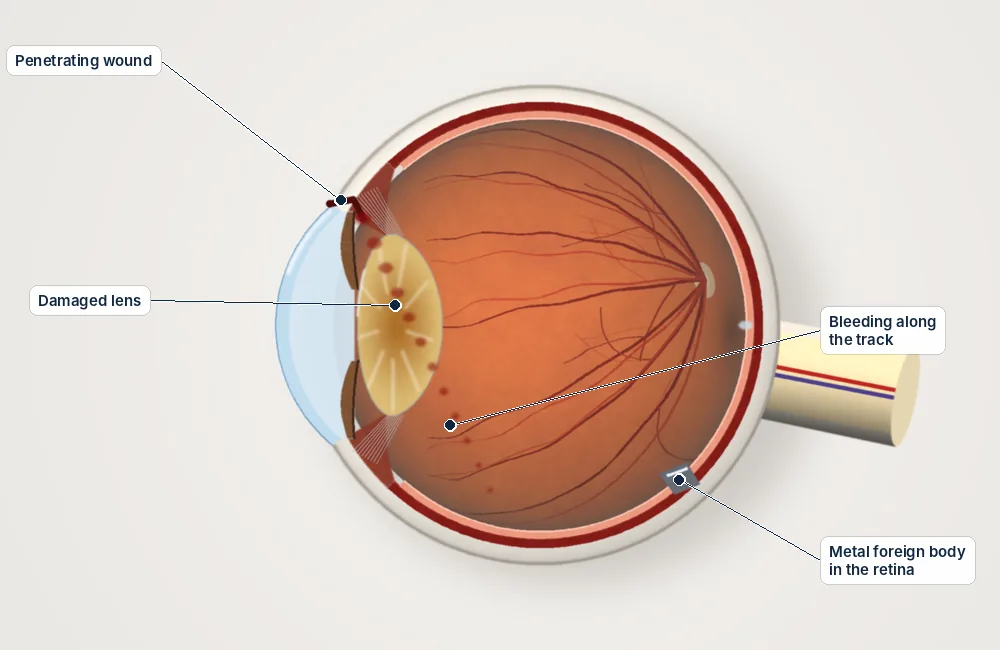
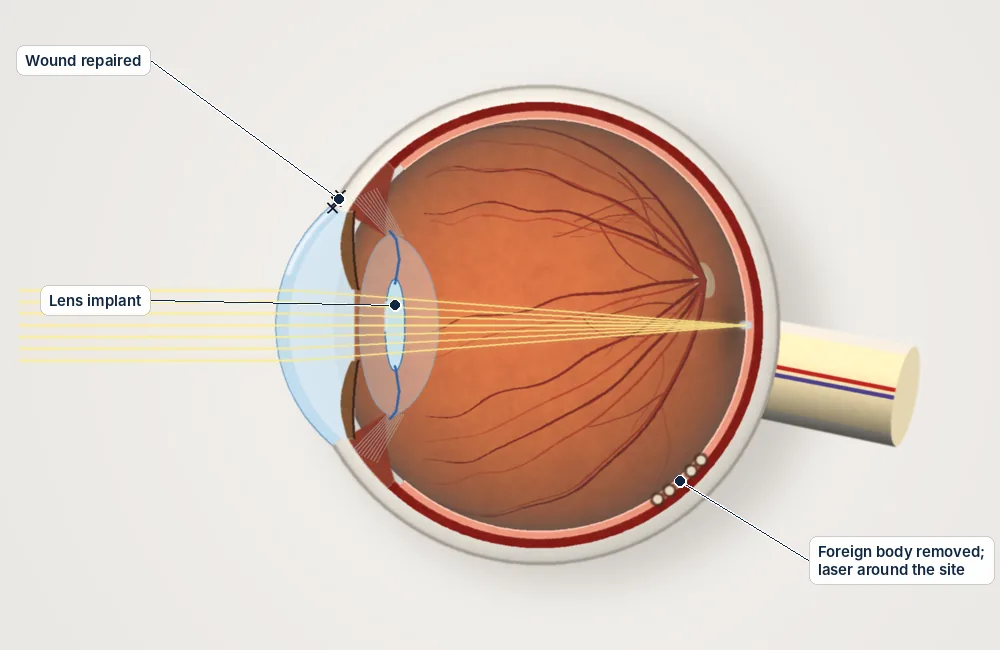
Inside the eye
Penetrating injuries may leave a foreign body inside the eye; reconstruction repairs the wound and retina.
Simplified diagrams for patient education, not to scale.
Everything you need to know
Tap a topic to open it.
Overview
Dr Weaver treats eye injuries surgically, including repair of the retina, the lens and the front of the eye. For complex injuries, he works with other specialists as needed.
Types of eye injury
Eye injuries range from minor scratches to severe injuries that threaten the whole eye. Dr Weaver treats injuries to the back of the eye, including:
- A cut or puncture to the eye: a sharp object goes through the wall of the eye. Prompt surgery is needed to close the wound, remove anything left inside, and repair damage to the retina and gel.
- A blow to the eye: this can cause a retinal detachment, bleeding inside the eye, a dislocated lens, a cataract, bruising of the retina or a split in the layer under it.
- Something left inside the eye: metal or other fragments need to be removed promptly. Iron fragments can badly damage the retina if they are left in.
- Retinal detachment after an injury: often harder to repair, because scar tissue can form on the retina.
- Cataract after an injury: the lens bag is often damaged, so the operation needs to be adapted.
- A dislocated lens: an injury can break the fibres holding the lens, so it shifts or falls into the back of the eye.
- Bleeding inside the eye: removed with a vitrectomy if it does not clear on its own.
- Bruising of the retina (commotio retinae): the retina swells and turns white after a blow. It is watched for tears and for effects on the macula.
- Damage to the iris: tears in the iris, a torn iris root, or a pupil that stays large and misshapen, causing glare and light sensitivity.
Surgery
The operation is planned around the injury. If the eye has been punctured, the wound is closed first. Further repair inside the eye is then planned once the eye has settled, usually 7 to 14 days later, when the risk of serious bleeding is lower.
Repair inside the eye may include:
- A vitrectomy to remove blood, scar tissue and anything left inside the eye
- Repair of a retinal detachment. After an injury this often needs silicone oil, because of scarring and the complexity of the detachment.
- Peeling scar tissue from the retina
- Dealing with a damaged lens: removing it and putting in a lens implant, either at the same time or later once the eye has settled
- A new lens implant when the lens bag cannot support one, usually fixed to the wall of the eye
- Iris repair: fine stitches to close tears in the iris, reattach a torn iris root or reshape a large pupil, which reduces glare and light sensitivity. Iris repair is often done at the same time as a new lens implant or retinal detachment repair.
Removing fragments from inside the eye
Metal fragments from high-speed injuries, such as hammering, grinding or firearms, need urgent surgery. Fragments containing iron slowly poison the retina if they are left in the eye (siderosis). Dr Weaver uses fine instruments and imaging during surgery to find and remove fragments while protecting the retina and lens.
Work, insurance and legal reports
Eye injuries at work or during sport may involve WorkCover, insurance or legal claims. Dr Weaver keeps detailed records of your vision, examination and surgery, and can prepare reports for WorkCover, insurers or lawyers when needed.
You may also want to read
Talk to Dr Weaver about your eyes
A referral from your GP or optometrist is needed to claim Medicare rebates. Our team can help with bookings at Robina and Tweed Heads.