
Macular oedemaGold Coast & Tweed Heads
Swelling of the macula from leaking blood vessels, caused by diabetes, vein occlusion, inflammation or surgery.
- Diabetic and post-surgical
- Injections or implants
- OCT monitoring
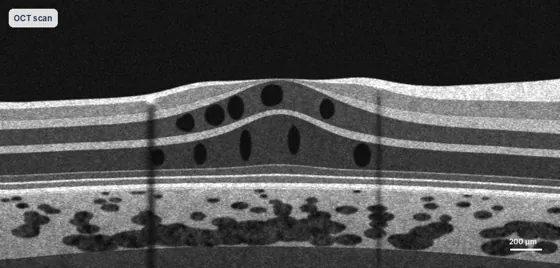
The key facts
What you may notice
- Blurred central vision
- Colours looking washed out
- Straight lines looking wavy
How it is diagnosed
- OCT scan measures the swelling
- Fluorescein angiography for the cause
- Blood sugar and blood pressure checks with your GP
How it is treated
- Anti-VEGF injections into the eye
- Long-acting steroid implants
- Anti-inflammatory drops after cataract surgery
Recovery
- Treatment is usually repeated over months
- OCT scans guide each decision
- Control of diabetes and blood pressure helps
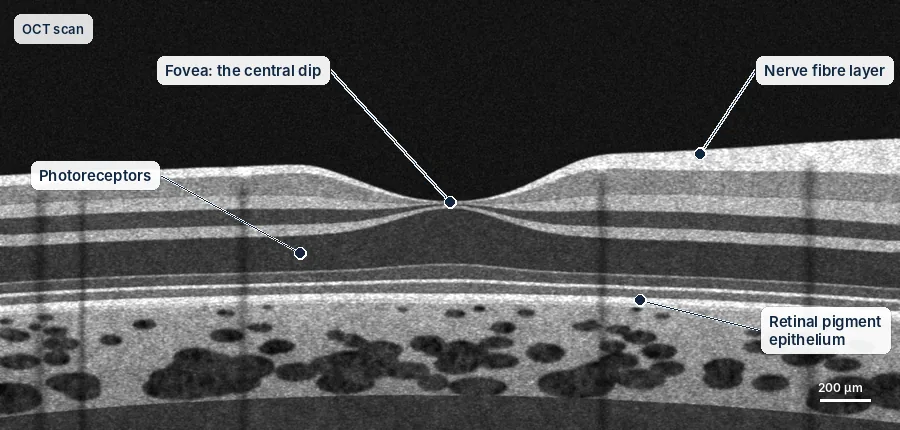
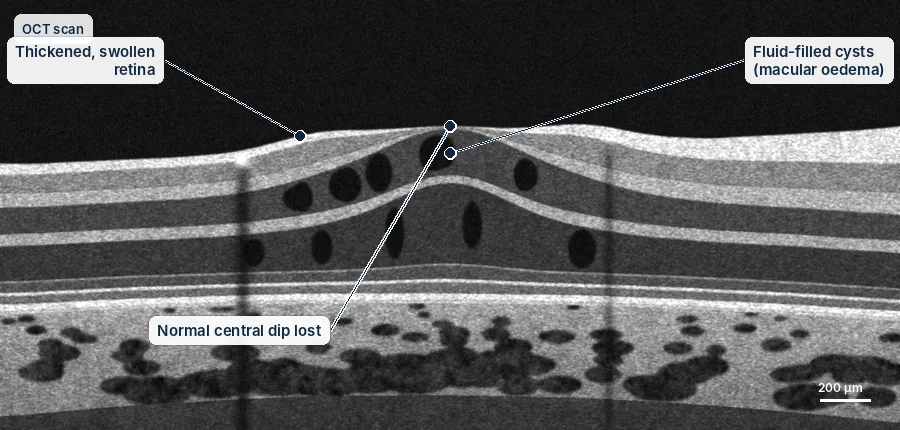
Inside the eye
Fluid-filled cysts thicken the retina and flatten the normal central dip.
Simplified diagrams for patient education, not to scale.
Understanding the risks
Every procedure carries some risk. These are approximate rates from published studies, grouped by how often they happen. They are averages, not a prediction for you; Dr Weaver will discuss your own risks before any treatment.
Aftercare guides| Risk | Approximate rate |
|---|---|
| Common, usually temporary or manageable | |
| Steroid implants: raised eye pressure | About 1 in 3, usually controlled with drops |
| Steroid implants: cataract | Common over time |
| Rare but serious | |
| Infection inside the eye (endophthalmitis) | About 1 in 2,000–3,000 injections |
| Retinal tear or detachment | Rare, about 1 in 5,000–10,000 injections; the risk adds up over many injections |
Everything you need to know
Tap a topic to open it.
Overview
Macular oedema is swelling of the macula caused by fluid leaking from damaged blood vessels. On an OCT scan it appears as fluid-filled cysts that thicken the retina.
Common causes
- Diabetes (diabetic macular oedema)
- Retinal vein occlusion
- After cataract or retinal surgery (cystoid macular oedema)
- Uveitis and other inflammation
Treatment
Treatment depends on the cause. Anti-VEGF injections are first-line for diabetic and vein-occlusion oedema. Steroid implants last several months and suit some patients. Swelling after surgery is usually treated with anti-inflammatory drops. Laser is used in selected cases.
Monitoring
OCT scans at each visit measure the thickness of the retina and guide how often treatment is needed. Good control of blood sugar, blood pressure and cholesterol helps.
You may also want to read
Talk to Dr Weaver about your eyes
A referral from your GP or optometrist is needed to claim Medicare rebates. Our team can help with bookings at Robina and Tweed Heads.