
 Written by Dr Travers Weaver, FRANZCO
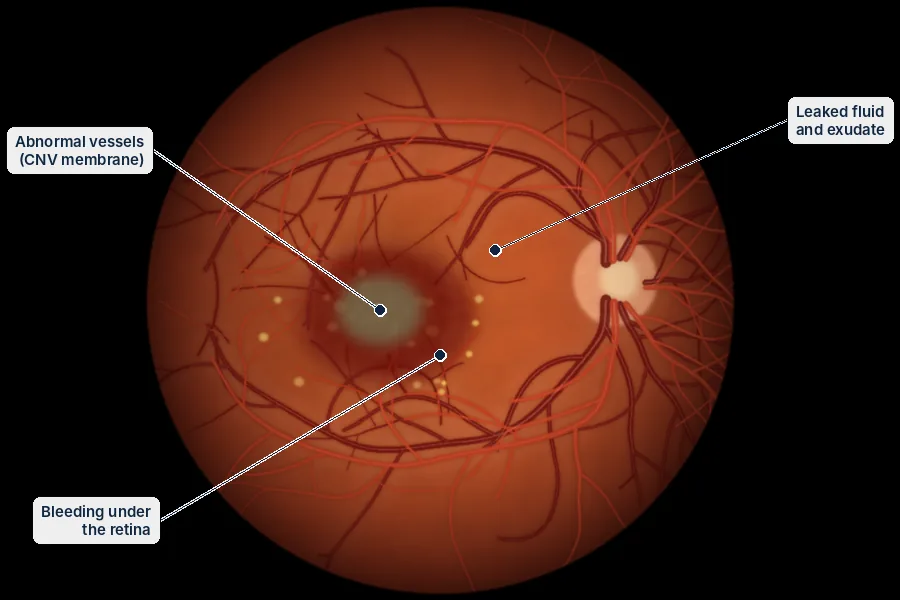
Wet age-related macular degeneration (AMD) occurs when abnormal blood vessels grow under the macula and leak fluid or blood. Without treatment, central vision can be lost quickly.
How the treatment works
Anti-VEGF medicines block the signal that drives these vessels to grow and leak. The medicine is placed into the vitreous gel with a very fine needle, an intravitreal injection.
On the day
- Your vision is checked and an OCT scan measures any fluid.
- Numbing drops and a small injection of local anaesthetic numb the eye, then it is cleaned with antiseptic.
- The injection itself takes a few seconds.
- Most people feel only brief pressure or no sensation at all.
- Afterwards the eye often feels gritty and irritated for the rest of the day.
Afterwards
Mild grittiness, a red spot on the white of the eye or small floaters are common and settle within days. Contact the rooms urgently if you notice increasing pain, redness or worsening vision, as these can be signs of infection, which occurs in about 1 in 2,000–3,000 injections.
How many injections?
Treatment usually starts with monthly injections, then the interval is extended based on your OCT scans, aiming for the longest gap that keeps the macula dry. Most people need ongoing treatment to maintain their vision.
This article is general information and does not replace individual medical advice.