
 Written by Dr Travers Weaver, FRANZCO
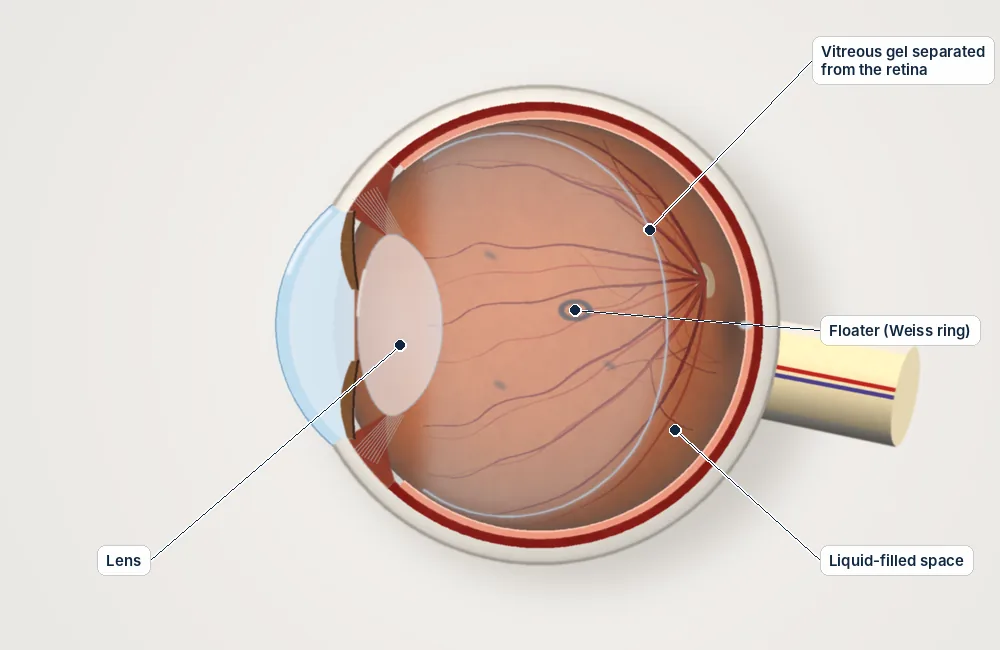
Floaters are small specks, threads or cobwebs that drift across your vision. They are shadows cast on the retina by clumps in the vitreous gel, and most people have a few.
Why new floaters appear
With age, the vitreous gel becomes more liquid and eventually separates from the retina. This is called a posterior vitreous detachment (PVD). It is common from the age of 50 and often causes a sudden new floater, sometimes shaped like a ring, and brief flashes of light.
When it can be serious
In about one in seven people with a symptomatic PVD, the gel pulls a tear in the retina. A tear can allow fluid underneath and lead to a retinal detachment, which needs urgent surgery.
Seek same-day assessment if you notice
- A sudden shower of new floaters
- New flashes of light
- A shadow or curtain spreading across your vision
- Sudden blurring
Call the rooms on (07) 5612 5200, or after hours go to the emergency department at Gold Coast University Hospital.
What happens at your appointment
Your pupils are dilated so the whole retina can be examined. If a tear is found, laser treatment in the rooms can seal it, often on the same day.
This article is general information and does not replace individual medical advice.